

Memory problems and dementia


Many of us become more forgetful as we get older.
It’s easy to worry that this might be an early sign of dementia or Alzheimer’s disease.
But there are many other reasons for this - only some of us will develop the more serious problems of dementia. This webpage looks at some of the causes of poor memory, including the dementias, and how to find help if you are worried about your own memory, or someone else’s.
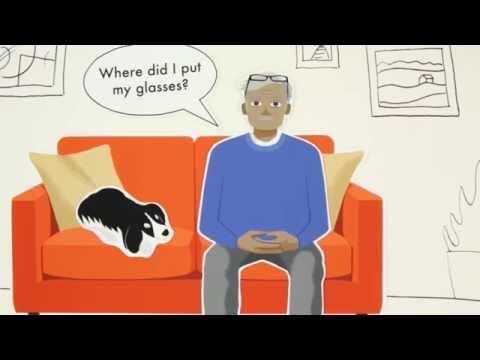
Many things can affect our memory – things such as stress, depression, grief - and even physical illnesses such as vitamin deficiencies or infections.1
Below, we focus on two specific memory problems: dementia, which comes in different forms, including Alzheimer’s disease, and Mild Cognitive Impairment (MCI).
About our information
We publish information to help people understand more about mental health and mental illness, and the kind of care they are entitled to.
Our information isn't a substitute for personalised medical advice from a doctor or other qualified healthcare professional. We encourage you to speak to a medical professional if you need more information or support. Please read our disclaimer.
Dementia is a general term used to describe a group of conditions which affect memory.
- You find it harder to remember things and develop other problems with your thinking. These make it more difficult to cope with your day to day life.
- These problems keep getting worse - or are 'progressive'. They are not a normal part of ageing.2
There are many different types of dementia. They all involve loss of memory, but they also have other symptoms, which differ according to the cause. A dementia will often start off with memory problems, but a person with dementia can also find it hard to:
- plan and carry out day-to-day tasks
- communicate with others.
They may also have changes in their mood, ability to make decisions, or you may see changes in their personality.
As dementia is 'progressive', someone with dementia will become more dependent upon others to help them as time goes on.
It currently affects more than 850,000 people in the UK3. It becomes more common as we get older, so:
- at the age of 65, about 2 in every 100 people will have dementia.
- by the age of 85, about 1 person in every 5 will have some degree of dementia.4
Dementia can sometimes affect younger people and can run in families, although this is less common.
Mild cognitive impairment (MCI) is a less serious memory problem. It does not interfere with your everyday life in a major way, and it is not severe enough to be called dementia. You may notice that you:
- forget names of people, places, passwords
- misplace things
- forget to do things you had planned to.
About one in every 10 people, over 65, probably has MCI. Of these, about one in ten will develop dementia in any one year.5 We cannot yet predict who will go on to develop dementia, and who will not.
Below we describe the most common dementias. But a person can sometimes have more than one of these disorders – a ‘mixed dementia’.
Alzheimer's Disease
Eileen is an 82 year old retired secretary, who lives with and cares for her frail, 90 year old, husband. She is well physically and does not take any medication.
Over the past 2 years, Eileen’s daughters have noticed that she has been losing her keys and forgetting to give her husband his medication on time. Although Eileen has always been an excellent driver, her car now has a dented bumper and a few scratches on the side, which Eileen could not explain. She has also been unable to turn the TV on with a new remote. At first they put these problems down to her age and stress with caring.
Eileen does not feel there is a real problem with her memory. She gets irritable and upset when her daughters tell her that they are worried about her memory. After much persuasion, she agrees to go and see her GP with them. The GP does some simple memory tests and then refers Eileen to a specialist Memory Service.
Alzheimer's accounts for about 6 in 10 of all dementias.6 It usually begins with memory problems and slowly gets worse over time. People will often notice that they cannot remember things that happened recently, even though they can still remember what happened years ago.
They will often find that they have difficulty recalling particular words and naming objects. Sometimes they are not aware of their memory problems, but other people notice them. A person with dementia can also find it hard to:
- learn new things
- remember recent events, appointments or phone messages
- remember the names of people or places
- understand other people, or to communicate with them
- remember where they have put things, which can be very upsetting – it can feel as though someone has been in their house, or has taken things
- understand that there is anything wrong with them – they may become cross when someone tries to help them.
These difficulties all make it harder and harder to cope with simple daily activities.
People who know someone with Alzheimer’s will often notice subtle changes to their personality. They behave or react differently to how they did before they became ill.
In Alzheimer's, proteins called amyloid and tau build up in the brain to form deposits called 'plaques' and 'tangles'. Damage happens to the brain in these areas, and this affects the chemicals in the brain which transmit messages from one cell to another, particularly one called acetylcholine.7
Vascular dementia
John is a 78 year old retired engineer. He has high blood pressure, diabetes and high cholesterol levels. After two heart attacks he had an angioplasty (a procedure to open blocked arteries) 18 months ago, but still gets chest pain at times.
After the first heart attack, his memory got worse for a while, then seemed to get better again. But since the second one, his wife and son have noticed that he is more forgetful and that he can’t concentrate like he used to. His moods are more up and down - he can get easily irritable and angry, but at other times he bursts into tears for no obvious reason. He is finding it harder to get around and he has wet himself once or twice, which he has found very embarrassing. After his GP found problems with his recent memory, an MRI brain scan showed signs of many tiny strokes.
This is caused by a reduced blood supply to the brain, due to damaged blood vessels. This means that parts of the brain do not get enough oxygen and nutrients, and so brain cells die.
Vascular dementias include:
- stroke-related – where a blood vessel to the brain is suddenly blocked, for example by a blood clot
- subcortical dementia – a type of dementia which affects the lower part of the brain, where blood flow is reduced in very small blood vessels.
You are more likely to develop a vascular dementia if you have one of the conditions which can lead to blocked arteries. These include high blood pressure, diabetes, high cholesterol – and, of course, smoking.8
It is difficult to predict how a vascular dementia will progress, as the problems depend on which part of the brain is affected. There may be:
- memory loss and difficulty concentrating
- language difficulties – like in Alzheimer’s
- mood swings or depression
- physical problems such as difficulty with walking, or incontinence.
Dementia with Lewy Bodies / Parkinson’s Disease Dementia
Terry is a 66-year-old retired teacher, who lives alone. He been feeling low since he retired 6 months ago and feels his thinking has really slowed down.
He has noticed a shake of his right arm developing over the last few months and yesterday he had a fall in the street. He has found himself shuffling, which has upset him because he has always seen himself as active and athletic. His daughter, Cath, was worried after a he nearly had an accident after he lost attention while driving. He put this down to poor sleep, as his bed is always a mess in the morning and he sometimes has bruises.
For a few weeks, he has started, in the evenings, to see a child playing silently in the corner of the room. He offered him something to eat one night, but then realised his daughter could not see the child. Cath feels that he is getting worse at remembering dates and planning his jobs around the house.
The GP is concerned and so refers him to the memory clinic. After a brain scan they diagnose dementia with Lewy bodies.
This is caused by protein deposits (Lewy bodies) building up in the brain.9 Symptoms of Parkinson’s disease develop, although often these appear later in the illness. Symptoms include:
- memory problems and difficulty planning tasks
- confusion which varies over the course of the day
- vivid visual hallucinations of people or animals
- sleep problems, moving around a lot when dreaming
- Parkinson’s features such as trembling of hands, muscle stiffness, falls or difficulty with walking.
Fronto-temporal dementia
This type of dementia mainly occurs in younger people. It affects the front of the brain more than other areas. It often starts in people in their 50s and 60s.11
It is more likely to cause personality and behavioural changes and problems with speech. Memory can be unaffected for a long time. There are 3 main types:
- behavioural – a person who is usually very polite and proper might start to become irritable or rude, or may lose interest in looking after their appearance
- semantic – the main sign is in problems with understanding of language and memory for facts
- progressive non-fluent aphasia – difficulty with speech and getting words out.
Limbic-predominant age-related TDP-43 encephalopathy (LATE)
A new dementia has recently been identified by looking at post-mortem samples of brain tissue. This is also common in older people and found along with the other disorders mentioned above. It is not yet known how to diagnose LATE.10
Rarer causes
There are many other different causes for dementia. Some of these include:
- Corticobasal Degeneration
- Creutzfeldt-Jakob Disease
- HIV-related cognitive impairment
- Huntington's Disease
- Multiple Sclerosis
- Korsakoff’s Syndrome
- Normal Pressure Hydrocephalus
- Posterior Cortical Atrophy
- Progressive Supranuclear Palsy.
A doctor will diagnose a dementia by identifying the pattern of symptoms that a person has, and finding out how these symptoms affect how that person copes from day to day.
So, the first step is an interview to get to know the person. Questionnaires will be used to test their thinking and memory – this is called 'cognitive testing'. A physical examination will be done and there will be some tests that involve simple physical tasks, like hand tapping. It is helpful for the assessor to be able to talk to a relative who can give their account of what has been happening.
This first meeting will help to identify problem areas and will often give clues as to the type of dementia. Blood tests and scans may be used to look for other reasons for these symptoms. Scans (CT/MRI brain scans) can help to identify the type of dementia and this can guide any treatment.12
Referral to a specialist ‘Memory Clinic’ is now common to help early diagnosis. The person with dementia will often see a range of professionals - psychiatrists, geriatricians, psychologists, occupational therapists and nurses.
Any of us can develop a dementia but it is not a natural or inevitable consequence of ageing. Some medical conditions can make it more likely13.
These include:
- Parkinson’s disease
- Strokes and heart disease
- High blood pressure and high cholesterol levels
- Type 2 diabetes mellitus.
It is important to try to treat and manage these risk factors, particularly high blood pressure and diabetes. It may also help, in the mid-life years, to manage any problems with hearing loss, obesity, social isolation and depression.14
Lifestyle factors that can increase risk of various types of dementia15 include:
- smoking
- drinking more than the safe limit of alcohol - more than 14 units per week
- poor diet
- lack of physical activity
- being overweight
- repeated head injuries, eg in boxers.
The World Health Organisation recommends that stopping smoking, reducing alcohol intake, increasing exercise and a healthy, balanced diet (e.g. the Mediterranean-like diet is specifically recommended) can reduce the risk of dementia, especially if these changes are made in your 40s and 50s.16
Genes also play a part in dementia. Alzheimer’s disease after the age of 65 is not usually caused by a genetic disorder, but several genes have been found that increase or decrease the risk by small amounts.17 If a relative has dementia, this does not mean that you will develop dementia and there is no test (yet) which can predict your personal risk.
In some families, ‘early onset dementia’ is more common, so here there does seem to be a stronger genetic cause. Also, people with Down’s syndrome are more likely to develop dementia early.17 If there has been more than one person in your family with a dementia starting before the age of 65, it could be worth getting advice from a clinical geneticist.
This will depend upon the diagnosis and your circumstances. There are no cures for these conditions yet. There are some options to help you, or your relative, to stay as independent and as mobile as possible, for as long as possible.
- A group of drugs called acetylcholinesterase inhibitors (donepezil, galantamine and rivastigmine) and another drug called memantine can treat some of the symptoms of Alzheimer's dementia and help people to maintain their independence for longer.18 These drugs are also helpful in Lewy Body Dementia, particularly if hallucinations are a problem.19 See our information on drug treatments of Alzheimer's disease.
- In Vascular dementia, your GP may suggest taking medication if you have high blood pressure, raised cholesterol or diabetes. It is also helpful to stop smoking, eat healthily and take regular exercise.
- Vitamins B and E, fatty acids (including fish oils) and complex dietary supplements are not recommended to reduce the risk of dementia in general20, but your GP may suggest treating vitamin deficiencies if they are present. Some complementary medicines can interact with prescribed medications, so it is best to check with your doctor if you are considering any of these.
- A psychological treatment called group cognitive stimulation may help with memory and improve the quality of a person's life, by using group games to stimulate thinking skills.21
- Reminiscence therapy involves the discussion of past activities, events and experiences with another person or group of people. This may help both understanding and knowledge (cognition), and can help to reduce the strain on carers.22
There is lots of research going on, in the UK and around the world, into the causes of dementia and how to treat it. There are currently three major research networks operating in the UK23:
- England - Dementias & Neurodegenerative Diseases Research Network (DeNDRoN)
- Scotland - The Scottish Dementia Clinical Research Network (SDCRN)
- Wales - The Wales Dementias and Neurodegenerative Diseases Research Network (NEURODEM Cymru)
Join Dementia Research is the main way to register you interest as a patient or carer in the UK. You can also sign up for someone else with their consent.
This service was developed by the National Institute for Health Research (NIHR) in partnership with Alzheimer Scotland, Alzheimer’s Research UK and Alzheimer’s Society to match interested volunteers with researchers.
You can also ask your GP or local mental health team what research is happening locally.
Simple practical steps
- Use a diary to help you remember appointments.
- Make lists of the things you have to do – and tick them off as you do them!
- Keep your mind active by reading or doing puzzles, learning new things and maintaining a sense of purpose in your life.
- Stay involved and connected – find your local Memory Café or other social activities which you enjoy.
- Eat a healthy diet and take physical exercise (it can help whatever your age).
- Get support if you are struggling with daily living or advice if others feel you are finding things hard to manage. There are many ways in which family, friends and services can help you to live independently for as long as possible.
Planning
There may come a time when you start to find it hard to make decisions about important parts of your life, such as managing your money, or in taking medical decisions. You can give a trusted relative, friend or solicitor the right to make such decisions on your behalf, based upon what you would preferred if you could have made the decision before your thinking was affected by a dementia.
This is called a Lasting Power of Attorney (LPA).24 A solicitor can help you arrange an LPA. There are 2 types of LPA - one for the management of ‘Property and Financial Affairs’, and another for matters involving ‘Health and Welfare’.
- Property and financial affairs LPA - Attorneys can be appointed to make decisions about such things as banking and investments, property sales, tax and benefits.
- Health and welfare LPAs - Attorneys can be appointed to make decisions about such things as medical treatment, day-to-day care and place of residence.
All LPAs must be registered with the Office of the Public Guardian before they can be used.
Note re: Enduring Power of Attorney (EPA): the LPA has now replaced the EPA. However, a valid EPA that was executed before 1 October 2007 will continue to be valid, even if it has not yet been registered.
Advance Decisions - it is possible to record your decision to refuse certain medical treatments in the future, should you lose the capacity to make such decisions. These will be respected by the professionals providing your care.25 This can be made at the same time or separately from an LPA.
'This is me'
For someone with memory problems, professionals need to be able to easily see important information about them.
‘This is Me’ is a document that can be completed for this purpose. It has lots of useful information about a person's medical history, their life and preferences. It can be taken to appointments or hospital admissions and is available via the Alzheimers.org website.
Driving
A diagnosis of dementia is not a reason to stop driving in itself, but as dementia progresses, driving skills will decrease. This may be due to changes to your visuospatial awareness, reduced concentration or affected judgement and decision-making skills. People may lack insight into the loss of these skills.26
- UK law states that if a license holder is diagnosed with dementia, they must contact/inform their relevant licensing agency promptly of the diagnosis – the Driver and Vehicle Licensing Agency (DVLA), or if in Northern Ireland, the Driver & Vehicle Agency (DVA).27
- If a doctor is concerned about the driving abilities of someone with dementia – and that person has not informed the licensing agency – they have a duty to inform the licensing agency.28
- If a doctor is concerned about dementia affecting your driving, they may say that you should stop driving immediately, or at least until the results of the DVLA/DVA investigation.
- A driver should also inform their insurance company to ensure their policy is valid.
- A driving assessment can help to clarify the effect that dementia is having on your driving - this information can help the licensing agency when they are deciding whether you can continue to drive. You will need a valid driving license for this assessment. You can do it whilst waiting for the licensing agency decision.
- Many people choose to stop driving themselves and send their license back to the DVLA/DVA, known as ‘voluntary surrender’.
Depression and anxiety
Depression and anxiety are common in people with a dementia. However, it is also possible for depression to look like a dementia.29 Like dementia, it may affect a person's ability to look after themselves.
This is called ‘pseudo-dementia' and it is important to identify it and treat it. If you are concerned that you or a relative may be depressed, seek advice from your GP in the first instance. Depression can be treated with antidepressants and talking therapy.30
In conclusion, if you are worried about your memory or someone else’s, make an appointment to see your GP. They can do a physical examination, some simple tests to check your memory, and order blood tests. If needed, your doctor can refer you to a specialist team, a psychologist or a specialist doctor.
Also see below for other organisations that can provide information and support at any stage of dementia. If you need help with practical activities and day-to-day care or benefits, you can contact your local authority for advice about social care and carer support services.
Other sources of information and helpful organisations
NHS - Dementia
Links to local services and information about dementia.
Alzheimer’s Society
National Helpline of advice and support: 0300 222 11 22.
Email: helpline@alzheimers.org.uk
The National Dementia Helpline provides information, advice, and support through listening, guidance and appropriate signposting to anyone affected by dementia.
Age UK
The Age UK Group works to improve later life for everyone by providing life-enhancing services and vital support. Call Age UK: 0800 169 8787; Email: contact@ageuk.org.uk
Carers UK
Advice Line: 0808 808 7777. Carers UK supports carers who are providing unpaid care for friends or relatives.
Citizen’s Advice Bureau
The Citizen’s Advice Bureau offer free, confidential and independent advice. Contact your local office for assistance with benefits, financial planning or organising care.
The Lewy Body Society
A charity which funds research into Dementia with Lewy Bodies, provides support and information to help families and carers who need to understand the disease and its impact.
The Law Society
The Law Society have lots of useful information about the legal issues involved in making a Power of Attorney or Advance Decisions and can be a useful resource for finding a solicitor to help.
Making an application to the Court of Protection
If you know or care for someone who is having difficulties making decisions about their personal health, finance or welfare, you may need to apply to the Court of Protection so that you (or someone else) can make decisions for them.
Office of the Public Guardian
An agency with responsibilities that extend across England and Wales (separate arrangements exist for Scotland and for Northern Ireland). It supports the Public Guardian in the registration of Enduring Powers of Attorney (EPA) and Lasting Powers of Attorney (LPA), and the supervision of deputies appointed by the Court of Protection.
Further reading
The Reading Agency: Reading Well for dementia
The Reading Agency’s Reading Well programme supports people to understand and manage their health and wellbeing using helpful reading. Reading Well books are all recommended by health experts, as well as people with lived experience of the conditions and topics covered and their relatives and carers. Reading Well is endorsed by the Royal College of Psychiatrists.
Reading Well for dementia recommends helpful reading and digital resources for people living with dementia. There are also books for family, friends and carers. The booklist provides reliable information, advice and support as well as personal stories and age-appropriate books for children.
The books can be recommended by health professionals or people can visit their local library and choose a Reading Well title to borrow for free.
- Prince, M. et al. (2014). Nutrition and Dementia: a review of available research. Alzheimer’s Disease International. London. [online] Available at: https://www.alz.co.uk/nutrition-report [Accessed 4 Jul. 2019].
- Alzheimer’s Society. (2019). Normal ageing vs dementia. [online] Available at: https://www.alzheimers.org.uk/about-dementia/symptoms-and-diagnosis/how-dementia-progresses/normal-ageing-vs-dementia [Accessed 4 Jul. 2019].
- Prince, M et al. (2014). Dementia UK: Update Second Edition. Alzheimer’s Society. [online] Available at: http://eprints.lse.ac.uk/59437/1/Dementia_UK_Second_edition_-_Overview.pdf [Accessed 4 Jul. 2019]. p 16.
- Alzheimer’s Research UK. (2018). Prevalence by age in the UK. [online] Available at: https://www.dementiastatistics.org/statistics/prevalence-by-age-in-the-uk/ [Accessed 4 Jul. 2019].
- Alzheimer’s Research UK. (2018). Mild cognitive impairment. [online] Available at: https://www.alzheimersresearchuk.org/about-dementia/types-of-dementia/mild-cognitive-impairment/about/ [Accessed 4 Jul. 2019].
- Alzheimer’s Research UK. (2018). Different types of dementia. [online] Available at: https://www.dementiastatistics.org/statistics/different-types-of-dementia/ [Accessed 4 Jul. 2019].
- National Institute on Aging. (2017). What Happens to the Brain in Alzheimer’s Disease? [online] Available at: https://www.nia.nih.gov/health/what-happens-brain-alzheimers-disease [Accessed 4 Jul. 2019].
- British Heart Foundation. (2019). Vascular dementia. [online] Available at: https://www.bhf.org.uk/informationsupport/conditions/vascular-dementia [Accessed 4 Jul. 2019].
- National Health Service. (2016). Overview: Dementia with Lewy bodies. [online] Available at: https://www.nhs.uk/conditions/dementia-with-lewy-bodies/ [Accessed 4 Jul. 2019].
- Nelson, P. et al. (2019). Limbic-predominant age-related TDP-43 encephalopathy (LATE): consensus working group report. Brain. Vol.142:6. pp 1503-1527. [online] Available at: https://academic.oup.com/brain/article/142/6/1503/5481202 [Accessed 4 Jul. 2019].
- Alzheimer’s association. (2019). Frontotemporal Dementia. [online] Available at: https://www.alz.org/alzheimers-dementia/what-is-dementia/types-of-dementia/frontotemporal-dementia [Accessed 4 Jul. 2019].
- National Institute for Health and Care Excellence. (2018) Dementia: assessment, management and support for people living with dementia and their carers. Nice guideline 97. [online] Available at: https://www.nice.org.uk/guidance/ng97/chapter/Recommendations#diagnosis [Accessed 4 Jul. 2019]. Standard 1.2.13.
- Prince, M. et al. (2014). World Alzheimer Report 2014. Dementia and Risk Reduction. An analysis of Protective and Modifiable Risk Factors. Alzheimer's Disease International, London UK. [online] Available at: https://www.alz.co.uk/research/WorldAlzheimerReport2014.pdf [Accessed 4 Jul. 2019]. pp. 66-83.
- Prince, M. et al. (2014). World Alzheimer Report 2014. Dementia and Risk Reduction. An analysis of Protective and Modifiable Risk Factors. Alzheimer's Disease International, London UK. [online] Available at: https://www.alz.co.uk/research/WorldAlzheimerReport2014.pdf [Accessed 4 Jul. 2019]. pp. 26-39.
- Prince, M. et al. (2014). World Alzheimer Report 2014. Dementia and Risk Reduction. An analysis of Protective and Modifiable Risk Factors. Alzheimer's Disease International, London UK. [online] Available at: https://www.alz.co.uk/research/WorldAlzheimerReport2014.pdf [Accessed 4 Jul. 2019]. pp. 42-63.
- Prince, M. et al. (2014). World Alzheimer Report 2014. Dementia and Risk Reduction. An analysis of Protective and Modifiable Risk Factors. Alzheimer's Disease International, London UK. [online] Available at: https://www.alz.co.uk/research/WorldAlzheimerReport2014.pdf [Accessed 4 Jul. 2019]. p. 61.
- Alzheimer’s Research UK. (2018). Genes and dementia. [online] Available at: https://www.alzheimersresearchuk.org/about-dementia/helpful-information/genes-and-dementia/ [Accessed 4 Jul. 2019].
- Knight, R et al. (2018). A Systematic Review and Meta-Analysis of the Effectiveness of Acetylcholinesterase Inhibitors and Memantine in Treating the Cognitive Symptoms of Dementia. Dementia and Geriatric Cognitive Disorders, vol. 45, no. 3-4. pp. 131-151. [online] Available at: https://www.karger.com/Article/FullText/486546 [Accessed 4 Jul. 2019].
- National Institute for Health and Care Excellence. (2018) Dementia: assessment, management and support for people living with dementia and their carers. Nice guideline 97. [online] Available at: https://www.nice.org.uk/guidance/ng97/chapter/Recommendations#pharmacological-interventions-for-dementia [Accessed 4 Jul. 2019]. Standards 1.5.10-1.5.13.
- World Health Organisation. (2019). Risk reduction of cognitive decline and dementia: WHO guidelines. Geneva: World Health Organisation. [online] Available at: https://apps.who.int/iris/bitstream/handle/10665/312180/9789241550543-eng.pdf?ua=1 [Accessed 4 Jul. 2019]. p. 19.
- Spector, A. et al. (2003). Efficacy of an evidence-based cognitive stimulation therapy programme for people with dementia: Randomised Controlled Trial. British Journal of Psychiatry. Vol. 183 pp. 248-254. [online] Available at: http://www.cstdementia.com/media/document/spector-et-al-2003.pdf [Accessed 4 Jul. 2019].
- Woods, B. et al. (2018). Reminiscence therapy for dementia. Cochrane Database of Systematic Reviews 2018, Issue 3. [online] Available at: https://www.cochranelibrary.com/cdsr/doi/10.1002/14651858.CD001120.pub3/full [Accessed 4 Jul. 2019].
- Join dementia research. (2019). About the service. [online] Available at: https://www.joindementiaresearch.nihr.ac.uk/content/about [Accessed 4 Jul. 2019].
- Office of the Public Guardian. (2019). Make, register or end a lasting power of attorney. Government Digital Service. [online] Available at: https://www.gov.uk/power-of-attorney [Accessed 4 Jul. 2019].
- National Health Service. (2017). Advance decision (living will); End of life care. [online] Available at: https://www.nhs.uk/conditions/end-of-life-care/advance-decision-to-refuse-treatment/ [Accessed 4 Jul. 2019].
- Alzheimer’s Society. (2019). Driving and dementia. [online] Available at: https://www.alzheimers.org.uk/get-support/staying-independent/driving-and-dementia [Accessed 4 Jul. 2019].
- Department of Transport. (2019). Dementia and driving. Government Digital Service. [online] Available at: https://www.gov.uk/dementia-and-driving [Accessed 4 Jul. 2019].
- General Medical Council. (2019). Patients’ fitness to drive and reporting concerns to the DVLA or DVA. [online] Available at: https://www.gmc-uk.org/ethical-guidance/ethical-guidance-for-doctors/confidentiality---patients-fitness-to-drive-and-reporting-concerns-to-the-dvla-or-dva/patients-fitness-to-drive-and-reporting-concerns-to-the-dvla-or-dva [Accessed 4 Jul. 2019].
- Thakur, M. (2007). Pseudodementia. Encyclopedia of Health & Aging. SAGE Publications, Inc. pp. 477-8. [online] Available at: http://go.galegroup.com/ps/i.do?p=GVRL&u=cuny_laguardia&id=GALE|CX2661000198&v=2.1&it=r&sid=GVRL&asid=3ad1e77f [Accessed 4 Jul. 2019].
- National Institute for Health and Care Excellence. (2009) Depression in adults: recognition and management. Nice clinical guideline 90. [online] Available at: https://www.nice.org.uk/guidance/cg90/chapter/1-Guidance#stepped-care [Accessed 4 Jul. 2019]. Standard 1.2.
Credits
Expert review: Professor Sharmi Bhattacharyya and Dr Jenny Martin
Series Editor: Dr Phil Timms
Series Manager: Thomas Kennedy
Published: Oct 2019
© Royal College of Psychiatrists


