
Depression in adults


This information leaflet is for anyone who has been feeling down, distressed, overwhelmed or hopeless, who feels like they are struggling and who thinks they may have depression. We hope it will also be helpful for relatives and friends.
It describes what depression feels like (both in your mind and in your body), ways you can help yourself, some of the help that is available, and how to help someone else who may be depressed.
At the end of the leaflet, there is a list of other places where you can get further information.
About our information
We publish information to help people understand more about mental health and mental illness, and the kind of care they are entitled to.
Our information isn't a substitute for personalised medical advice from a doctor or other qualified healthcare professional. We encourage you to speak to a medical professional if you need more information or support. Please read our disclaimer.
Everyone has times in their lives when they feel fed up or miserable. It is usually for a particular reason, does not interfere too much with daily life and does not usually last longer than a week or two.
However, if these feelings go on for weeks or months, or become so bad they start to affect every area of your life, you may have depression and need to get help.
People experience different levels of depression in different ways. There are mild, moderate or severe levels of depression.1
People’s experience of depression is also influenced by their cultural background and by their personal values, beliefs and language.
If you are depressed, you will probably notice some of the following:1 2
In your mind, you:
- feel unhappy, miserable, down, depressed – this feeling just won’t go away and can be worse at a particular time of day, often first thing in the morning
- can’t enjoy anything
- lose interest in seeing people and lose touch with friends
- can’t concentrate properly and find it harder to make decisions
- lose your self-confidence
- feel guilty and unworthy
- become pessimistic
- start to feel hopeless, and perhaps even suicidal.
In your body, you may find that you:
- feel restless, nervous or agitated
- feel exhausted and have no energy
- can’t get to sleep or sleep too much
- wake early in the morning and/or throughout the night
- have a headache or stomach upset
- lose interest in sex
- can’t eat and lose weight or 'comfort eat' more and put on weight.
Other people may notice that you:
- make mistakes at work or can't focus
- seem unusually quiet and withdrawn, or are avoiding people
- worry about things more than usual
- are more irritable than usual
- are sleeping more or less than usual
- complain about vague physical problems
- stop looking after yourself properly – you don't wash your hair or your clothes
- stop looking after your home properly – you stop cooking, don't tidy or forget to change the sheets on your bed.
Most people will not experience all of these, and some people may only be aware of physical symptoms. You may think that you have a physical illness because you feel very tired or have problems with sleep, but physical symptoms like these can be the first sign of depression.1 2
You may not realise how depressed you are, especially if it has come on gradually. Sometimes people try to struggle on and may even start to blame themselves for being lazy or lacking willpower.
It sometimes takes a friend or a partner to persuade you that there really is a problem and suggest that you seek help.
You may need to seek help if you or a friend or partner notice that:
- Your feelings of depression affect your work, interests and feelings towards your family and friends
- Your feelings of depression have been going on for a while and don't seem to get any better
- You find yourself feeling that life is not worth living, or that other people would be better off without you.
What about anxiety?
Some people can also feel very anxious when they become depressed.1 3
You may feel on edge all the time, worried, fearful, and may find it hard to go out or be around people. Or you may experience physical symptoms such as dry mouth, sweating, breathlessness or stomach churning. See our leaflet on anxiety for more information.
If you experience depression and anxiety, you will normally receive treatment for the one that is causing you the most difficulty.1
What about bipolar disorder (manic depression)?
Some people who have depression may also have extended periods when they feel elated and extremely overexcited. This is called ‘mania’ and it may mean that you could have bipolar disorder (which used to be called manic depression).4 5
Please see our information on bipolar disorder to find out when and how to get help if you think you may have this condition.
Depression is not a sign of weakness. It can happen to the most determined of people – even famous people, athletes and celebrities can experience depression.
There will sometimes be a clear reason for becoming depressed, sometimes not. It can be a disappointment, a frustration, or because you have lost something or someone important to you.
There is often more than one reason, and these will be different for different people. We describe a few of the common reasons below.
Life events and personal circumstances
Depression can be triggered by a stressful or distressing event, such as a bereavement, relationship breakdown, or losing a job.6 7
If your life circumstances mean that you live alone or have no friends or family around, you may be more likely to become depressed.8 9
Physical health
Sleep, diet and exercise can all affect our mood and how we cope with things.
Physical health problems, particularly those that are serious or long-term, can cause depression or make it worse.10 11 These include:
- life-threatening illnesses like cancer and heart disease
- long-term and/or painful illnesses, like arthritis
- viral infections like 'flu' or glandular fever – particularly in younger people
- hormonal problems, like an under-active thyroid
- conditions affecting the brain or nervous system.12
Childhood trauma
Some people may be more vulnerable to depression than others. This may be because of difficult childhood experiences or trauma, which can include abuse (physical, sexual or psychological), neglect, witnessing violence or a traumatic event, or an unstable family environment.13 14 15
Alcohol and drug use
Regular heavy drinking16 17 or using drugs like cannabis18 19 can make you more likely to become depressed in the long-term.
For more information see our leaflet on alcohol, mental health and the brain.
Genetic factors
Similar genetic ‘risk factors’ are involved in whether someone develops severe depression, bipolar disorder or schizophrenia. There are also environmental risk factors, and these can interact with genetic risk factors to increase or decrease your risk of developing these conditions.
For example, you might have genetic risk factors that mean you are more likely to develop severe depression. However, if you grow up or live in a stable and positive environment this may reduce your risk of developing a serious mental illness.
Having a parent with a serious mental illness like severe depression is the strongest known risk factor for developing a serious mental illness yourself. Children with a parent who has a serious mental illness have a 1 in 3 chance of developing a serious mental illness themselves.
When thinking about the causes of developing depression, it is important to remember that lots of different things are involved, and that no one risk factor causes depression.20
Men who experience depression are less likely to talk about their feelings and are less likely to ask for help.21 They may express their depression in a different way, through sudden anger, increased loss of control, greater risk-taking and aggression, as well as using alcohol and drugs to cope.23, 24 Men are also more likely than women to die by suicide.21 23
Around 12% of women who are pregnant will experience depression during their pregnancy, while 15–20% will become depressed in the first year after having a baby.24 For more information, please see our leaflet on postnatal depression.
People who are transgender (they identify with a different gender than the one they are assigned at birth) may experience higher levels of depression and anxiety than those who identify with the gender they were assigned at birth. People who are non-binary (they do not identify as being either a woman/female or a man/male) may also have higher levels of depression and anxiety.25, 26
People who identify as lesbian, gay or bisexual are more likely to have a mental health problem (including depression) than heterosexual people.27 They are also at higher risk of attempting suicide and self-harm.27, 28
The good news is that most people with depression will get better on their own by doing things to help themselves. You may be able to overcome depression by yourself, which will give you a feeling of achievement and confidence to tackle such feelings again if you feel low in the future.
Taking up some of the suggestions in this leaflet may shorten a period of depression and can help you stay well in the future.
But some people need extra help, especially if their depression is severe or it goes on for a long time, or the things they have tried to get better haven’t worked.
If this is the first time you are experiencing depression, you have a roughly 50:50 chance of becoming depressed again, so it is important to know how to get help if you need it.1, 29
So if you think you need to talk to someone about how you feel, try not to put it off, as it can help you get back to doing the things you used to do and enjoy life sooner.
Sometimes it can take a few goes to get other people to understand how you feel. Be persistent and don’t give up – you can get the right help.
These are some suggestions you can try when you are feeling depressed. It is important that you find what works best for you and create your own list of helpful strategies.
Talk to someone: If you’ve had some bad news or a major upset in your life, try not to bottle things up. It can help to tell someone close to you how you feel about it. If you don't feel you can talk to anyone, try writing down how you feel.
Keep active: If you are able to, get outside for some exercise, even if it’s only for a short walk. This will help to keep you physically fit and sleep better. It can also help you to focus on other things and not on painful thoughts and feelings.
Eat properly: You may not feel very hungry, but try to eat regularly. It’s easy to lose weight and run low on vitamins when you are depressed – or to eat too much junk food and put on weight you don't want. A balanced diet, with lots of fruit and vegetables, can help keep your body and mind healthy.
Avoid alcohol and drugs: Alcohol can make you feel better for a couple of hours, but it actually makes depression worse in the long run. The same goes for street drugs, particularly cannabis, amphetamines, cocaine and ecstasy.
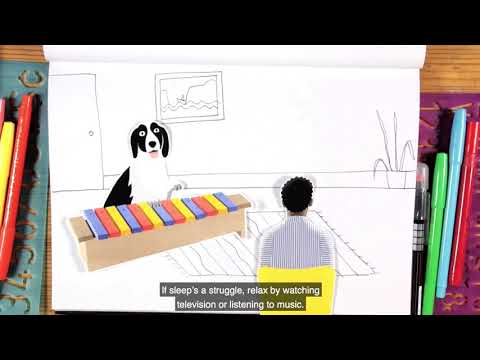
Create a sleep routine: Try to go to bed at the same time each night and get up at the same time each morning. Do something restful that you enjoy before going to bed, like listening to relaxing music or reading a book. If you can’t sleep, get out of bed and do something calming like sitting quietly on the couch. For more information about sleep, see our leaflet on sleeping well.
Try relaxing activities: If you feel tense all the time, try relaxation exercises, yoga, massage, aromatherapy, or another activity you find relaxing.
Do something you enjoy: Take some regular time to do something you really enjoy – like playing a game, reading, or another hobby.
Read about depression: There are many books and websites about depression. They can help you to understand what is going on, give you strategies to cope better, and can also help friends and relatives to understand what you are going through.
Practice self-kindness: You may be a perfectionist who drives yourself too hard. Try to set yourself more realistic goals or expectations. Be kinder to yourself.
Take a break: It can be really helpful to get away and out of your normal routine for a few days. Give yourself a break from your daily stress and worries. If you can change your environment, even for a few hours, it can help.
Join a support group: It can be hard to help yourself when you're depressed. Talking with other people in a similar situation can help. Have a look at the list of organisations at the end of this leaflet for some ideas.
Keep hopeful: Remind yourself that many other people have had depression and have got better – there is help out there and you are entitled to the help you need to feel better.If trying to get better on your own isn’t working as well or as quickly as you would like, then it may be a good idea to speak to your GP.
Most people with depression are treated by their GP. If you don’t have a regular GP, try to find a doctor in your local practice who you feel comfortable with, and who you can see regularly.
Your GP will talk with you to review your symptoms and to find out what treatments will work for you.
The best treatment for you will depend on your current level of depression, how long it has lasted, and whether you have had depression in the past.
Your GP can also give you a proper physical check-up. This is because some physical illnesses can cause depression. If you are already having treatment for a physical illness, your GP will need to know about it.
If you are experiencing depression for the first time, you won’t normally be offered an antidepressant. Your GP may suggest a low-intensity psychological intervention (or talking treatment) such as:1 2
- self-help leaflets or books based on cognitive behavioural therapy (CBT) principles (supported by a healthcare professional)
- self-help computerised CBT programmes (also supported by a healthcare professional)
- group-based exercise
- a group-based programme, either based on peer support self-help or CBT.
Your GP can help you to choose the right one for you.
If these don’t work well for you, your GP may suggest trying one of the interventions in the next section on treatments for moderate and severe depression.
Your GP may suggest trying a high-intensity psychological intervention or antidepressant medication, or both.1 You can speak with them to decide which is the most appropriate treatment for you.
Psychological interventions
There are many types of psychological interventions for people with depression and you may be referred on to whatever is available in your local area.1
If there is a waitlist before you can receive a particular psychological intervention, you should speak to your doctor about what you can do to look after yourself in the meantime.
Cognitive behavioural therapy (CBT)
Many of us have habits of negative thinking which, quite apart from what is happening in life, are likely to make us depressed and keep us depressed. CBT helps you to:
- identify any unrealistic and unhelpful ways of thinking
- then develop new, more helpful ways of thinking and behaving.
CBT has the best evidence as a treatment for depression.1 30 31 See our leaflet on cognitive behavioural therapy for further information.
Interpersonal therapy (IPT)
Interpersonal therapy can help you to identify and address any problems in your relationships with family, partners and friends.
Behavioural activation
Behavioural activation encourages you to develop more positive behaviour such as planning activities and doing constructive things that you may usually avoid doing.
Couples therapy
If you are in a relationship that seems to be affecting your depression, then couples therapy may be appropriate to help you understand the links between depression and your relationship. It can also help you build a more supportive relationship with your partner.
Counselling
Trained counsellors can help you explore your symptoms and problems, and provide you with support and guidance.
Psychodynamic psychotherapy
This treatment helps you to see how your past experiences may be affecting your life here and now.
Antidepressants
If your depression is moderate or severe or goes on for a long time, your doctor may suggest a course of antidepressants, usually one that is a selective serotonin reuptake inhibitor (SSRI).1 32 They will talk to you about which antidepressant may work best for you – this will depend on whether you have taken antidepressants in the past, if you are taking other medications, and any other physical health problems you may have.
Do antidepressants have side effects?
Like all medicines, antidepressants have side effects, though these are usually mild and tend to wear off after a couple of weeks.32 33
Your doctor can advise you on what to expect and you should talk to them if there is anything that worries you, or you are experiencing a lot of side effects. You will also get written information on the medication from your pharmacist.
If an antidepressant makes you sleepy, you should take it at night, so it can help you to sleep. However, if you feel sleepy during the day, you should not drive or work with machinery until the effect wears off. Alcohol can make you very sleepy if you drink while taking the tablets, so it is best avoided.34
Unlike some other medications or drugs (such as nicotine or alcohol), you won’t find yourself craving an antidepressant, or feeling like you need to take more to get the same effect.1
How long do I need to take an antidepressant for?
At first, your doctor will need to see you regularly (after the first 2 weeks, then between 2–4 weeks for the first 3 months, then less often) to make sure the treatment is working.1
If you’ve been having suicidal thoughts, or you are younger than 30, your doctor may want to see you more often (usually weekly). This is because some antidepressants can initially increase suicidal thoughts, especially if you are younger.1
If taking antidepressants helps, you should keep taking them for at least 6 months, even if you feel better. This can help reduce your chances of the depression coming back.1
You may have to stay on them for longer than this if you have experienced depression in the past. You doctor will advise you when you can stop taking them, and how to do this safely.
If you stop taking an antidepressant suddenly, you can experience withdrawal symptoms. These include problems sleeping, anxiety, dizziness or stomach aches.1
If you don’t think the antidepressant you are taking is working (after about 3 to 4 weeks of taking them), then talk to your doctor, who may change your dose or offer you a different type of antidepressant or medication.1
For more information, please see our leaflet on antidepressants.
Most people with depression get the help they need from their GP. If your depression doesn’t improve after receiving treatment through your GP and you need more specialist help, you may be referred to a specialist mental health service or team.1
The mental health professional will want to find out about your general background and about any serious illnesses or emotional problems you may have had in the past.
They will ask about what has been happening in your life recently, how the depression has developed and whether you have had any treatment for it already.
It can sometimes be difficult to answer all these questions, but the information you give will help the doctor get to know you as a person and get an idea of what would be good options for you.
If your depression is severe or needs specialist treatment, you may need to come into hospital to receive treatment. Your care team will make sure that you get the right treatment and support that will work for you.
Electroconvulsive therapy (ECT)
Electroconvulsive therapy (ECT for short) is mostly used as a treatment for:
- severe depression if the person's life is at risk and they need urgent treatment
- moderate or severe depression when no other treatment has helped.1
ECT involves passing an electric current through the brain, so is always given in hospital under general anaesthetic. Some people have temporary memory problems after ECT. See our leaflet on electroconvulsive therapy for more information.
St John's Wort is a herbal remedy available from health-food shops and pharmacies and is used by some people for depression. It is not normally offered or advised by doctors because:
- the correct dose for depression is not clear
- different types can vary in what they contain
- it can cause serious problems when taken with other medicines (especially the contraceptive pill, anticoagulants or anticonvulsants).1
If you want more advice, you should discuss it with your GP or pharmacist.
- Listen. This can be harder than it sounds. You may have to hear the same thing over and over again. It's usually best not to offer advice unless it's asked for, even if the answer seems perfectly clear to you. If depression has been brought on by a particular problem, you may be able to help find a solution or at least a way of tackling the difficulty.
- Spend time with them. It's helpful just to spend time with someone who is depressed. Letting them know you are there for them can help encourage them to talk and keep going with doing things to feel better.
- Reassure them. Someone who is depressed will find it hard to believe that they can ever get better. You can reassure them that they will get better, but you may have to repeat this over and over again.
- Support their self-care. Make sure that they are buying enough food and eating regularly, with a good amount of fruit and vegetables in their diet. You may be able to help them to get out and do some exercise or other enjoyable activities, which can be a better alternative than using alcohol or drugs to cope with their feelings.
- Take them seriously. If they are getting worse and start to talk of not wanting to live or even hinting at harming themselves, take them seriously. Make sure that they tell their doctor.
- Encourage them to accept help. Encourage them to see their doctor, take their medication, or talk to their therapist or counsellor. If they are concerned about their treatment, encourage them to discuss these with their doctor.
- Look after yourself. It can be emotionally draining to support someone who feels depressed, so make sure you look after your own mental health and wellbeing.
A small number of people with depression may attempt or die by suicide.35 36
If you are concerned about someone then it’s important to talk to them about suicidal thoughts and feelings and to take them seriously.
Asking someone if they are feeling suicidal will not put the idea into their head or make it more likely that they will act on their thoughts.37 38
If you are still worried about someone, you can contact one of the services below for more support and advice.
The Zero Suicide Alliance provides free online training around suicide awareness and prevention, providing a starting place for people who want to support someone they are worried about.
If you need some support right now, there are services that can help you:
UK-wide
- Call the Samaritans on 116 123 (freephone), email jo@samaritans.org or visit the Samaritans website
- Call NHS 111 (freephone) or visit the NHS webpage on Where to get urgent help for mental health
- Contact your GP for an emergency appointment (which can be done over the phone or by video)
- Contact your local mental health crisis team (if you don’t know who they are, NHS 111 can help you)
- Get help online through Mind's I Need Urgent Help web page
Wales
- Visit the Welsh government mental health advice line, ‘C.A.L.L’ (Wales) or call 0800 132 737 (freephone)
Scotland
- Visit Breathing Space (Scotland) or call 0800 83 85 87 (freephone)
Northern Ireland
- Visit Lifeline or call 0808 808 8000 (freephone)
If you don’t feel like you can keep yourself safe right now, and other support isn’t enough to help you, then call 999 or go to your nearest hospital A&E department (sometimes known as the emergency department). Or, you can ask someone else to call 999 for you or to take you to A&E.
Association for Postnatal Illness (APNI): APNI provides support to mothers with postnatal depression. It exists to increase public awareness of the condition and to encourage research into its cause and nature. Helpline: 0207 386 0868 (10am–2pm Monday to Friday).
Black, African and Asian Therapy Network (BAATN): The UK’s largest independent organisation, with the aim of addressing the inequality of access to appropriate psychological services for Black, African, South Asian and Caribbean people. They provide information on mental health, a directory where people can find a therapist, events, training and other resources. Email: connect@baatn.org.uk
CALM (Campaign against Living Miserably): A national campaign focused on fighting depression and suicide among young men. Confidential helpline: 0800 58 58 58 (5pm to midnight, 7 days a week).
Men’s Health Forum: A charity that supports men’s health in England, Wales and Scotland, through research, raising awareness about men’s health issues, and providing health information and advice. Phone: 020 7922 7908.
Mental Health Forum: An online community where people can get mutual support from people with a similar experience.
Mind: A mental health charity that provides advice and support for people experiencing mental health problems, as well as information about local peer support groups. Helpline: 0300 123 3393 (9am to 6pm, Monday to Friday). Also provides information on how to cope for people who are supporting someone else. Local Minds can help you find a mental health service close to where you live.
MindOut: A mental health service run by and for lesbian, gay, bisexual, trans and queer (LGBTQ) people. They provide advice and information, online support, counselling, peer support and advocacy. Phone: 01273 234 839 Email: info@mindout.org.uk
NHS: Information on how to access mental health services
The Reading Agency: Reading Well for mental health: The Reading Agency’s Reading Well programme supports people to understand and manage their health and wellbeing using helpful reading. Reading Well books are all recommended by health experts, as well as people with lived experience of the conditions and topics covered and their relatives and carers. Reading Well is endorsed by the Royal College of Psychiatrists.
Relate: UK's largest provider of relationship support. Offers a range of counselling services. Enquiries: 0300 003 0396.
Samaritans: A national charity based in the UK and Republic of Ireland that provides confidential emotional support to any person who is suicidal or in distress. Helpline: 116 123. Email: jo@samaritans.org
SaneLine: A national out-of-hours telephone helpline offering emotional support and information for people affected by mental health problems. Helpline: 0300 304 700 (4.30pm to 10.30pm daily). Email: support@sane.org.uk
Stonewall: Provides information and support for LGBTQ+ communities, including information on services and local groups. Freephone: 0800 050 2020 (open Monday to Friday, 9:30-4:30) Email info@stonewall.org.uk
Switchboard: An LGBTQ+ helpline that provides an information, support and referral service for anyone who wishes to discuss issues around their sexuality and/or gender identity, including their mental health. They provide an online chat, phoneline: 0300 330 0360 (from 10am to 10pm everyday) Email: chris@switchboard.lgbt
Young Minds: A national charity committed to improving the mental health of all children and young people under 25. Parents’ helpline: 0808 802 5544 (9.30am to 4pm Monday to Friday).
Zero Suicide Alliance: Provides free online training around suicide awareness and prevention, to help people support someone they may be worried about.
- National Institute for Health and Care Excellence (NICE). Depression in adults: recognition and management. NICE Guideline (CG90). 2009.
- American Psychiatric Association (APA). Diagnostic and Statistical Manual of Mental Disorders: DSM-5, 5th ed. Arlington, VA: American Psychiatric Association; 2013.
- Malhi GS, Mann JJ. Depression. The Lancet. 2018;392(10161):2299–312.
- Singh T, Rajput M. Misdiagnosis of bipolar disorder. Psychiatry. 2006;3(10):57–63.
- Fritz K, Russell AMT, Allwang C, Kuiper S, Lampe L, Malhi GS. Is a delay in the diagnosis of bipolar disorder inevitable? Bipolar Disorder. 2017;19:396–400.
- Hammen C. Stress and depression. Annual Reviews of Clinical Psychology. 2005;1:293–319.
- Liu RT, Alloy LB. Stress generation in depression: a systematic review of the empirical literature and recommendations for future study. Clin Psychol Rev. 2010;30(5):582–93.
- Erzen E, Çikrikci Ö. The effect of loneliness on depression: a meta-analysis. Int J Soc Psychiatry. 2018;64(5):427–35.
- Teo AR, Choi H, Valenstein M. Social relationships and depression: ten-year follow-up from a nationally representative study. PLoS ONE. 2013;8(4):e62396.
- Goodwin GM. Depression and associated physical diseases and symptoms. Dialogues Clin Neurosci. 2006;8(2):259–65.
- Read JR, Sharpe L, Modini M, Dear BF. Multimorbidity and depression: a systematic review and meta-analysis. J Affect Disord. 2017;221:36–46.
- National Institute for Health and Care Excellence (NICE). Depression in adults with a chronic physical health problem: recognition and management. NICE Guideline (CG91).
- Mandelli L, Petrelli C, Serretti A. The role of specific early trauma in adult depression: a meta-analysis of published literature. Childhood trauma and adult depression. European Psychiatry. 2015;30(6):665–80.
- Negele A, Kaufhold J, Kallenbach L, Leuzinger-Bohleber M. Childhood trauma and its relation to chronic depression in adulthood. Depress Res Treat. 2015;2015:650804.
- Carr CP, Martins CMS, Stingel AM, Lemgruber VB, Juruena MF. The role of early life stress in adult psychiatric disorders: a systematic review according to childhood trauma subtypes. The Journal of Nervous and Mental Disease. 2013;201(12):1007–20.
- Sullivan LE, Fiellin DA, O'Connor PG. The prevalence and impact of alcohol problems in major depression: a systematic review. Am J Med. 2005;118(4):330–41.
- Boden JM, Fergusson DM. Alcohol and depression. Addiction. 2011;106:906–14.
- Lev-Ran S, Roerecke M, Le Foll B, George TP, McKenzie K, Rehm J. The association between cannabis use and depression: a systematic review and meta-analysis of longitudinal studies. Psychological Medicine. 2014;44(4):797–810.
- Degenhardt L, Hall W, Lynskey M. Exploring the association between cannabis use and depression. Addiction. 2003;98:1493-1504.
- Sandstrom A, Sahiti Q, Pavlova B, Uher R. Offspring of parents with schizophrenia, bipolar disorder, and depression, Psychiatric Genetics: October 2019. 29.5, 160-169
- Sagar-Ouriaghli I, Godfrey E, Bridge L, Meade L, Brown JSL. Improving mental health service utilization among men: a systematic review and synthesis of behavior change techniques within interventions targeting help-seeking. American Journal of Men’s Health. 2019;13(3):1557988319857009.
- Cavanagh A, Wilson CJ, Kavanagh DJ, Caputi P. Differences in the expression of symptoms in men versus women with depression: a systematic review and meta-analysis. Harvard Review of Psychiatry. 2017;25(1):29–38.
- Hawton K, Comabella CC, Haw C, Saunders K. Risk factors for suicide in individuals with depression: a systematic review. Journal of Affective Disorders. 2013;147(1-3):17–28.
- National Institute for Health and Care Excellence (NICE). Antenatal and postnatal mental health: clinical management and service guidance. NICE Guideline (CG192). 2020.
- Plöderl M, Tremblay P. Mental health of sexual minorities: a systematic review. International Review of Psychiatry. 2015;27(5):367–85.
- Borgogna NC, McDermott RC, Aita SL, Kride MM. Anxiety and depression across gender and sexual minorities: Implications for transgender, gender nonconforming, pansexual, demisexual, asexual, queer, and questioning individuals. Psychology of Sexual Orientation and Gender Diversity. 2019;6(1):54–63.
- King M, Semlyen J, Tai SS, et al. A systematic review of mental disorder, suicide, and deliberate self harm in lesbian, gay and bisexual people. BMC Psychiatry. 2008;8:70.
- Miranda-Mendizábal A, Castellví P, Parés-Badell O, Almenara J, Alonso I, Blasco MJ, et al. Sexual orientation and suicidal behaviour in adolescents and young adults: systematic review and meta-analysis. British Journal of Psychiatry. 2017;211(2):77–87.
- Burcusa SL, Iacono WG. Risk for recurrence in depression. Clin Psychol Rev. 2007;27(8):959-985.
- López-López JA, Davies SR, Caldwell DM, et al. The process and delivery of CBT for depression in adults: a systematic review and network meta-analysis. Psychol Med. 2019;49(12):1937–47.
- Santoft F, Axelsson E, Öst LG, Hedman-Lagerlöf M, Fust J, Hedman-Lagerlöf E. Cognitive behaviour therapy for depression in primary care: systematic review and meta-analysis. Psychol Med. 2019;49(8):1266–74.
- Cleare A, Pariante C, Young A, Anderson I, Christmas D, Cowen P, Dickens C, Ferrier I, Geddes J, Gilbody S, Haddad P, Katona C, Lewis G, Malizia A, McAllister-Williams R, Ramchandani P, Scott J, Taylor D and Uher R. Evidence-based guidelines for treating depressive disorders with antidepressants: a revision of the 2008 British Association for Psychopharmacology guidelines. Journal of Psychopharmacology. 2015;29(5):459–25.
- Ferguson JM. SSRI antidepressant medications: adverse effects and tolerability. Primary Care Companion J Clin Psychiatry. 2001;3(1):22–7.
- Weathermon R, Crabb DW. Alcohol and medication interactions. Alcohol Res Health. 1999;23(1):40–54.
- Dong M, Zeng L-N, Lu L, Li X-H, Ungvari GS, Ng CH, et al. Prevalence of suicide attempt in individuals with major depressive disorder: a meta-analysis of observational surveys. Psychological Medicine. 2019;49(10):1691–704.
- Cuijpers, P., Schoevers, R.A. Increased mortality in depressive disorders: a review. Current Psychiatry Reports. 2004; 6:430–7.
- Dazzi T, Gribble R, Wessely S, Fear NT. Does asking about suicide and related behaviours induce suicidal ideation? What is the evidence? Psychological Medicine. 2014;44(16):3361–3.
- Blades CA, Stritzke WGK, Page AC, Brown JD. The benefits and risks of asking research participants about suicide: a meta-analysis of the impact of exposure to suicide-related content. Clinical Psychology Review. 2018;64:1–12.
Credits
Produced by the RCPsych Public Engagement Editorial Board and the National Collaborating Centre for Mental Health.
Series Editor: Dr Phil Timms
Series Manager: Thomas Kennedy
Published: Oct 2020
© Royal College of Psychiatrists


