User content image
Play
Royal College of Psychiatrists - Logo
SKIP NAVIGATION
  • SKIP NAVIGATION
  • About the College
  • News and features
  • International
Logout MY CONTENT 
Login
DONATE
Search
  • Become a psychiatrist

    Become a psychiatrist

    • Choose Psychiatry

      Choose Psychiatry

      • What is psychiatry?
      • How to become a psychiatrist
      • Why choose psychiatry?
      • What next?
      • On a break from training?
      • Help support our campaign
      • Choose Psychiatry – Guidance for Medical Schools
      • 'Make this a better world'
      • Continue to choose psychiatry
    • Sixth formers and school students
    • Medical students

      Medical students

      • Becoming a student associate
      • Psychiatry attachments
      • Awards, prizes and bursaries for medical students
      • PsychSocs
      • National Student Psychiatry Conference
      • Summer and autumn schools
      • FuturePsych – the student associate magazine
    • Foundation doctors

      Foundation doctors

      • Foundation doctor associates
      • Making the most of your psychiatry placement
      • Opportunities for foundation doctors
      • FuturePsych - the associate magazine
      • Applying to Core and Higher Training
      • Careers in mental health research
    • Help us promote psychiatry

      Help us promote psychiatry

      • How can I help?
      • Ideas to inspire you
      • Resources to help you promote psychiatry
      • RCPsych Recruitment Strategy 2022-2027
    • Supporting Medical Students: Medical Schools
    • Choose Psychiatry
      • What is psychiatry?
      • How to become a psychiatrist
      • Why choose psychiatry?
      • What next?
      • On a break from training?
      • Help support our campaign
      • Choose Psychiatry – Guidance for Medical Schools
      • 'Make this a better world'
      • Continue to choose psychiatry
    • Sixth formers and school students
    • Medical students
      • Becoming a student associate
      • Psychiatry attachments
      • Awards, prizes and bursaries for medical students
      • PsychSocs
      • National Student Psychiatry Conference
      • Summer and autumn schools
      • FuturePsych – the student associate magazine
    • Foundation doctors
      • Foundation doctor associates
      • Making the most of your psychiatry placement
      • Opportunities for foundation doctors
      • FuturePsych - the associate magazine
      • Applying to Core and Higher Training
      • Careers in mental health research
    • Help us promote psychiatry
      • How can I help?
      • Ideas to inspire you
      • Resources to help you promote psychiatry
      • RCPsych Recruitment Strategy 2022-2027
    • Supporting Medical Students: Medical Schools
  • Training

    Training

    • Exams

      Exams

      • Can I take an exam?
      • Contact the Exams team
      • Preparing for exams
      • Applying for your exam
      • Exam results
      • A fair exam
      • Examiners and exam panels recruitment
      • FAQs about applying for exams
      • FAQs about preparing for exams
      • FAQs about the day of the exam
      • FAQs about assessment and results
      • Exams news and updates
      • Exams Reading List
      • FAQs about our exam diet in Doha
    • Curricula and guidance

      Curricula and guidance

      • 2022 Curricula Implementation Hub
      • 2014 GMC approved curricula (ending July 2024)
      • Specialty training guides
      • Dual training
      • Assessment Strategy Review
    • Portfolio Online
    • Your training

      Your training

      • Psychiatric Resident Doctors' Committee: supporting you
      • Routes to Registration
      • Applying for training
      • Run-through training
      • Training less than full time
      • Time out of training
      • Academic Training
      • Understanding Career Choices in Psychiatry
      • Leadership and Management Fellow Scheme
      • Prizes and bursaries for resident doctors
      • Cost of Training
      • Industrial action FAQs
      • Distribution of medical training posts
      • Presenting evidence at mental health tribunals
    • Medical training initiative (MTI)
    • International Medical Graduates
    • Employer Hub
    • Undergraduate education forum
    • Quality Assurance in Training

      Quality Assurance in Training

      • Externality
    • Credentialing
    • CPD eLearning
    • Dean's Quarterly Updates

      Dean's Quarterly Updates

      • Dean's Quarterly Update - July 2025
      • Dean's Quarterly Update - April 2025
      • Dean's Quarterly Update - January 2025
      • Dean's Quarterly Update - September 2024
      • Dean's Quarterly Update - June 2024
      • Dean's Quarterly Update - February 2024
      • Dean's Quarterly Update - October 2023
      • Dean's Quarterly Update - June 2023
      • Dean's Quarterly Update - March 2023
      • Dean's update - 2022
    • Building Capacity in Perinatal Psychiatry

      Building Capacity in Perinatal Psychiatry

      • Perinatal Psychiatry Masterclass Series
      • About the Building Capacity Project
    • RCPsych Learn
    • Exams
      • Can I take an exam?
      • Contact the Exams team
      • Preparing for exams
      • Applying for your exam
      • Exam results
      • A fair exam
      • Examiners and exam panels recruitment
      • FAQs about applying for exams
      • FAQs about preparing for exams
      • FAQs about the day of the exam
      • FAQs about assessment and results
      • Exams news and updates
      • Exams Reading List
      • FAQs about our exam diet in Doha
    • Curricula and guidance
      • 2022 Curricula Implementation Hub
      • 2014 GMC approved curricula (ending July 2024)
      • Specialty training guides
      • Dual training
      • Assessment Strategy Review
    • Portfolio Online
    • Your training
      • Psychiatric Resident Doctors' Committee: supporting you
      • Routes to Registration
      • Applying for training
      • Run-through training
      • Training less than full time
      • Time out of training
      • Academic Training
      • Understanding Career Choices in Psychiatry
      • Leadership and Management Fellow Scheme
      • Prizes and bursaries for resident doctors
      • Cost of Training
      • Industrial action FAQs
      • Distribution of medical training posts
      • Presenting evidence at mental health tribunals
    • Medical training initiative (MTI)
    • International Medical Graduates
    • Employer Hub
    • Undergraduate education forum
    • Quality Assurance in Training
      • Externality
    • Credentialing
    • CPD eLearning
    • Dean's Quarterly Updates
      • Dean's Quarterly Update - July 2025
      • Dean's Quarterly Update - April 2025
      • Dean's Quarterly Update - January 2025
      • Dean's Quarterly Update - September 2024
      • Dean's Quarterly Update - June 2024
      • Dean's Quarterly Update - February 2024
      • Dean's Quarterly Update - October 2023
      • Dean's Quarterly Update - June 2023
      • Dean's Quarterly Update - March 2023
      • Dean's update - 2022
    • Building Capacity in Perinatal Psychiatry
      • Perinatal Psychiatry Masterclass Series
      • About the Building Capacity Project
    • RCPsych Learn
  • Members

    Members

    • Membership

      Membership

      • Members login
      • Receipts
      • Pay Your Subscription
      • Direct Debit
      • Your subscription
      • Grades of membership
      • Benefits of membership
      • Fellowship and other Honours
    • Submitting your CPD
    • Supporting your professional development

      Supporting your professional development

      • New consultants (StartWell)
      • Revalidation
      • Assessing and managing risk of patients causing harm
      • Leadership and management
      • Working less than full time
      • Writing clinic letters
      • If a patient dies by suicide
    • CPD eLearning
    • Your faculties

      Your faculties

      • Faculty of Academic Psychiatry
      • Faculty of Addictions Psychiatry
      • Faculty of Child and Adolescent Psychiatry
      • Faculty of Eating Disorders Psychiatry
      • Faculty of Forensic Psychiatry
      • Faculty of General Adult Psychiatry
      • Faculty of the Psychiatry of Intellectual Disability
      • Faculty of Liaison Psychiatry
      • Faculty of Medical Psychotherapy
      • Faculty of Neuropsychiatry
      • Faculty of Old Age Psychiatry
      • Faculty of Perinatal Psychiatry
      • Faculty of Rehabilitation and Social Psychiatry
      • Faculty job descriptions
    • Specialty and Specialist Psychiatrists

      Specialty and Specialist Psychiatrists

      • A message from the Chair
      • Who are SAS psychiatrists?
      • How to enter the SAS grade
      • SAS doctors resources
      • College SAS training and events
      • Startwell and Staywell
      • SAS Strategy
      • SAS careers
    • Devolved Nations

      Devolved Nations

      • RCPsych in Scotland
      • RCPsych in Wales
      • CBSeic Cymru
      • RCPsych in Northern Ireland
      • Executive Committee job descriptions
    • English Divisions

      English Divisions

      • Eastern Division
      • London Division
      • Northern and Yorkshire Division
      • North West Division
      • South Eastern Division
      • South West Division
      • Trent Division
      • West Midlands Division
      • Executive Committee job descriptions
      • All Division events
    • Special Interest Groups

      Special Interest Groups

      • How to join a Special Interest Group (SIG)
      • Adolescent Forensic Psychiatry Special Interest Group (AFPSIG)
      • Arts Psychiatry Special Interest Group (ArtSIG)
      • Digital Psychiatry Special Interest Group (DPSIG)
      • Evolutionary Psychiatry Special Interest Group (EPSIG)
      • History of Psychiatry Special Interest Group (HoPSIG)
      • Neurodevelopmental Psychiatry Special Interest Group (NDPSIG)
      • Occupational Psychiatry Special Interest Group (OPSIG)
      • Philosophy Special Interest Group 
      • Private and Independent Practice Special Interest Group (PIPSIG)
      • Rainbow Special Interest Group
      • Spirituality and Psychiatry Special Interest Group (SPSIG)
      • Sport and Exercise Psychiatry Special Interest Group (SEPSIG)
      • Transcultural psychiatry Special Interest Group (TSIG)
      • Volunteering and International Psychiatry Special Interest Group (VIPSIG)
      • Women and Mental Health Special Interest Group (WMHSIG)
      • Annual SIG Newsletters
      • Special Interest Group (SIG) events
    • Workforce Wellbeing Hub

      Workforce Wellbeing Hub

      • Psychiatrists' Support Service (PSS)
      • Top 10 tips for wellbeing
      • Coaching and mentoring
      • If a patient dies by suicide
      • If a patient commits homicide
      • Support for Refugee Psychiatrists
      • Wellbeing Committee
    • Public members list
    • Publications and books
    • Posts for members
    • eLearning Hub
    • Membership
      • Members login
      • Receipts
      • Pay Your Subscription
      • Direct Debit
      • Your subscription
      • Grades of membership
      • Benefits of membership
      • Fellowship and other Honours
    • Submitting your CPD
    • Supporting your professional development
      • New consultants (StartWell)
      • Revalidation
      • Assessing and managing risk of patients causing harm
      • Leadership and management
      • Working less than full time
      • Writing clinic letters
      • If a patient dies by suicide
    • CPD eLearning
    • Your faculties
      • Faculty of Academic Psychiatry
      • Faculty of Addictions Psychiatry
      • Faculty of Child and Adolescent Psychiatry
      • Faculty of Eating Disorders Psychiatry
      • Faculty of Forensic Psychiatry
      • Faculty of General Adult Psychiatry
      • Faculty of the Psychiatry of Intellectual Disability
      • Faculty of Liaison Psychiatry
      • Faculty of Medical Psychotherapy
      • Faculty of Neuropsychiatry
      • Faculty of Old Age Psychiatry
      • Faculty of Perinatal Psychiatry
      • Faculty of Rehabilitation and Social Psychiatry
      • Faculty job descriptions
    • Specialty and Specialist Psychiatrists
      • A message from the Chair
      • Who are SAS psychiatrists?
      • How to enter the SAS grade
      • SAS doctors resources
      • College SAS training and events
      • Startwell and Staywell
      • SAS Strategy
      • SAS careers
    • Devolved Nations
      • RCPsych in Scotland
      • RCPsych in Wales
      • CBSeic Cymru
      • RCPsych in Northern Ireland
      • Executive Committee job descriptions
    • English Divisions
      • Eastern Division
      • London Division
      • Northern and Yorkshire Division
      • North West Division
      • South Eastern Division
      • South West Division
      • Trent Division
      • West Midlands Division
      • Executive Committee job descriptions
      • All Division events
    • Special Interest Groups
      • How to join a Special Interest Group (SIG)
      • Adolescent Forensic Psychiatry Special Interest Group (AFPSIG)
      • Arts Psychiatry Special Interest Group (ArtSIG)
      • Digital Psychiatry Special Interest Group (DPSIG)
      • Evolutionary Psychiatry Special Interest Group (EPSIG)
      • History of Psychiatry Special Interest Group (HoPSIG)
      • Neurodevelopmental Psychiatry Special Interest Group (NDPSIG)
      • Occupational Psychiatry Special Interest Group (OPSIG)
      • Philosophy Special Interest Group 
      • Private and Independent Practice Special Interest Group (PIPSIG)
      • Rainbow Special Interest Group
      • Spirituality and Psychiatry Special Interest Group (SPSIG)
      • Sport and Exercise Psychiatry Special Interest Group (SEPSIG)
      • Transcultural psychiatry Special Interest Group (TSIG)
      • Volunteering and International Psychiatry Special Interest Group (VIPSIG)
      • Women and Mental Health Special Interest Group (WMHSIG)
      • Annual SIG Newsletters
      • Special Interest Group (SIG) events
    • Workforce Wellbeing Hub
      • Psychiatrists' Support Service (PSS)
      • Top 10 tips for wellbeing
      • Coaching and mentoring
      • If a patient dies by suicide
      • If a patient commits homicide
      • Support for Refugee Psychiatrists
      • Wellbeing Committee
    • Public members list
    • Publications and books
    • Posts for members
    • eLearning Hub
  • Events

    Events

    • Conferences and training events

      Conferences and training events

      • Grand Rounds
      • Register your interest - CESR in Psychiatry Training
      • MHA Section 12 and Approved Clinician Training
      • Subscribe to receive the Events eNews
      • Old Age Faculty Resident Doctors
    • International Congress 2026

      International Congress 2026

      • Poster Presentations 2026
      • Exhibition opportunities 2026
    • In-house training

      In-house training

      • Competing interests
    • Free webinars
    • Claiming expenses

      Claiming expenses

      • What can I claim
    • Terms and conditions for event booking

      Terms and conditions for event booking

      • Cancellation policy
      • Code of conduct for events
      • Parent and baby policy
    • Speaker guidance for online events
    • EventsAir FAQs
    • Speaker guidance for in-person events
    • Conferences and training events
      • Grand Rounds
      • Register your interest - CESR in Psychiatry Training
      • MHA Section 12 and Approved Clinician Training
      • Subscribe to receive the Events eNews
      • Old Age Faculty Resident Doctors
    • International Congress 2026
      • Poster Presentations 2026
      • Exhibition opportunities 2026
    • In-house training
      • Competing interests
    • Free webinars
    • Claiming expenses
      • What can I claim
    • Terms and conditions for event booking
      • Cancellation policy
      • Code of conduct for events
      • Parent and baby policy
    • Speaker guidance for online events
    • EventsAir FAQs
    • Speaker guidance for in-person events
  • Improving care

    Improving care

    • College Centre for Quality Improvement (CCQI)

      College Centre for Quality Improvement (CCQI)

      • What we do in the CCQI
      • Quality Networks and Accreditation
      • National Clinical Audits
      • Multi-source feedback
      • CCQI resources
      • CCQI - who we are
      • CCQI research and evaluation
      • Health of Nation Outcome Scales (HoNOS)
    • Influencing and campaigning for better mental health policy

      Influencing and campaigning for better mental health policy

      • College Reports
      • Position Statements
      • Integrated care and mental health
      • Children and young people's mental health Green Paper
      • Cross-government mental health and wellbeing plan 
      • RCPsych in Parliament
      • Processes for producing College publications, consultations, surveys and endorsements
      • Other policy areas
      • Mental Health Watch
      • Reforming The Mental Health Act
      • The Mental Health Policy Group (MHPG)
      • Preventing mental illness: Our manifesto for the next UK general election
      • The 2024 General Election and our manifesto
      • Assisted dying/assisted suicide
    • Planning the psychiatric workforce

      Planning the psychiatric workforce

      • About our workforce unit
      • Job planning and recruitment
      • Our workforce census
      • Campaigning for the mental health workforce of the future
      • Workforce strategy
      • Job description approval process
    • Public Mental Health Implementation Centre (PMHIC)

      Public Mental Health Implementation Centre (PMHIC)

      • Partnerships and events  
      • How to work with the Public Mental Health Implementation Centre
      • About the PMHIC
      • PMHIC Aims and objectives
      • Reports
      • About public mental health
      • PMHIC Parliamentary Launch 
      • PMHIC Commercial Determinants of Mental Health (CDoMH) Symposium 
      • PMHIC Parliamentary Roundtable 
      • Smoking and Mental Health in Wales 
      • Public Mental Health Learning Community 
      • Weight management and mental health: A framework for action in Wales
      • Health inequalities briefing pack
    • National Collaborating Centre for Mental Health (NCCMH)

      National Collaborating Centre for Mental Health (NCCMH)

      • About NCCMH and our work
      • Clinical guideline development
      • Competence frameworks
      • Quality improvement programmes
      • Reviews, evaluations and reports
      • Service design and development
      • Work with us
      • Culture of Care Programme
      • A–Z of NCCMH publications
      • CARC - Learning programme
      • Research team and programmes
    • Act Against Racism

      Act Against Racism

      • Tackling racism in the workplace
      • Adopt the guidance and join our network
      • Act Against Racism: a toolkit to support the campaign
      • If you're experiencing racism at work
      • Allies: information and signposting
      • FAQs about the campaign
      • Act Against Racism campaign films
      • Resources
    • Sustainability, climate change and mental health

      Sustainability, climate change and mental health

      • Sustainability and mental health policy
      • Helping others work sustainably
      • Sustainability and climate change: Taking action at RCPsych
      • Why is sustainability important?
    • Public Health and its role in mental heath
    • Using quality improvement
    • Net Zero Mental Health Care Guidance and Education

      Net Zero Mental Health Care Guidance and Education

      • Net Zero Mental Health Care Report Launch Event
    • Mental Health Awareness Week
    • Invited Review Service
    • Physician Assistant Review

      Physician Assistant Review

      • Physician Associate Review Meeting Summaries
    • Providing Reasonable Adjustments - for mental health employers

      Providing Reasonable Adjustments - for mental health employers

      • Introducing the guidance
      • What are reasonable adjustments?
      • How to implement the 15 recommendations
      • Information about allyship
      • Case studies 
      • Help spread the word 
      • Sign up to adopt the guidance 
    • Seni Lewis Award

      Seni Lewis Award

      • Seni Lewis Award toolkit
    • College Centre for Quality Improvement (CCQI)
      • What we do in the CCQI
      • Quality Networks and Accreditation
      • National Clinical Audits
      • Multi-source feedback
      • CCQI resources
      • CCQI - who we are
      • CCQI research and evaluation
      • Health of Nation Outcome Scales (HoNOS)
    • Influencing and campaigning for better mental health policy
      • College Reports
      • Position Statements
      • Integrated care and mental health
      • Children and young people's mental health Green Paper
      • Cross-government mental health and wellbeing plan 
      • RCPsych in Parliament
      • Processes for producing College publications, consultations, surveys and endorsements
      • Other policy areas
      • Mental Health Watch
      • Reforming The Mental Health Act
      • The Mental Health Policy Group (MHPG)
      • Preventing mental illness: Our manifesto for the next UK general election
      • The 2024 General Election and our manifesto
      • Assisted dying/assisted suicide
    • Planning the psychiatric workforce
      • About our workforce unit
      • Job planning and recruitment
      • Our workforce census
      • Campaigning for the mental health workforce of the future
      • Workforce strategy
      • Job description approval process
    • Public Mental Health Implementation Centre (PMHIC)
      • Partnerships and events  
      • How to work with the Public Mental Health Implementation Centre
      • About the PMHIC
      • PMHIC Aims and objectives
      • Reports
      • About public mental health
      • PMHIC Parliamentary Launch 
      • PMHIC Commercial Determinants of Mental Health (CDoMH) Symposium 
      • PMHIC Parliamentary Roundtable 
      • Smoking and Mental Health in Wales 
      • Public Mental Health Learning Community 
      • Weight management and mental health: A framework for action in Wales
      • Health inequalities briefing pack
    • National Collaborating Centre for Mental Health (NCCMH)
      • About NCCMH and our work
      • Clinical guideline development
      • Competence frameworks
      • Quality improvement programmes
      • Reviews, evaluations and reports
      • Service design and development
      • Work with us
      • Culture of Care Programme
      • A–Z of NCCMH publications
      • CARC - Learning programme
      • Research team and programmes
    • Act Against Racism
      • Tackling racism in the workplace
      • Adopt the guidance and join our network
      • Act Against Racism: a toolkit to support the campaign
      • If you're experiencing racism at work
      • Allies: information and signposting
      • FAQs about the campaign
      • Act Against Racism campaign films
      • Resources
    • Sustainability, climate change and mental health
      • Sustainability and mental health policy
      • Helping others work sustainably
      • Sustainability and climate change: Taking action at RCPsych
      • Why is sustainability important?
    • Public Health and its role in mental heath
    • Using quality improvement
    • Net Zero Mental Health Care Guidance and Education
      • Net Zero Mental Health Care Report Launch Event
    • Mental Health Awareness Week
    • Invited Review Service
    • Physician Assistant Review
      • Physician Associate Review Meeting Summaries
    • Providing Reasonable Adjustments - for mental health employers
      • Introducing the guidance
      • What are reasonable adjustments?
      • How to implement the 15 recommendations
      • Information about allyship
      • Case studies 
      • Help spread the word 
      • Sign up to adopt the guidance 
    • Seni Lewis Award
      • Seni Lewis Award toolkit
  • Mental health

    Mental health

    • Mental illnesses and mental health problems

      Mental illnesses and mental health problems

      • ADHD in adults
      • Alcohol, mental health and the brain
      • Anorexia and bulimia
      • Anxiety and generalised anxiety disorder (GAD)
      • Autism and mental health
      • Avoidant/restrictive food intake disorder (ARFID)
      • Bereavement
      • Bipolar disorder
      • Cannabis and mental health
      • Catatonia
      • Cocaine dependence
      • Coping after a traumatic event
      • Debt and mental health
      • Delirium
      • Depression
      • Depression in older adults
      • Feeling overwhelmed
      • Gambling disorder
      • Heroin dependence
      • Hoarding
      • Intellectual disabilities
      • Medically unexplained symptoms
      • Memory problems and dementia
      • Obsessive-compulsive disorder (OCD)
      • Perinatal OCD
      • Perinatal OCD for carers
      • Personality disorder
      • Physical illness and mental health
      • Postnatal depression
      • Postnatal depression key facts
      • Postnatal depression for carers
      • Postpartum psychosis
      • Postpartum psychosis for carers
      • Post-traumatic stress disorder (PTSD) 
      • Schizoaffective disorder
      • Schizophrenia
      • Seasonal affective disorder (SAD)
      • Self-harm
      • Shyness and social phobia
      • Sleeping well
      • Psychosis
    • Support, care and treatment

      Support, care and treatment

      • Alzheimers drug treatments
      • Antidepressants
      • Antipsychotics
      • Antipsychotics in pregnancy
      • Being sectioned (in England and Wales)
      • Benefits, financial support and debt advice
      • Benzodiazepines
      • Caring for someone with a mental illness
      • Children's social services and safeguarding
      • Cognitive behavioural therapy (CBT)
      • Complementary and alternative medicines: herbal remedies
      • Complementary and alternative medicines: physical treatments
      • Long-acting injectable (depot) antipsychotics
      • Deprivation of Liberty Safeguards
      • Electroconvulsive therapy (ECT)
      • Hypnosis and hypnotherapy
      • Liaison psychiatry services
      • Lithium in pregnancy and breastfeeding
      • Mental capacity and the law
      • Mental health in pregnancy
      • Mental health rehabilitation services
      • Mental health services and teams in the community
      • Mental Health Tribunals
      • Mother and baby units (MBUs)
      • Neuromodulation
      • What are perinatal mental health services?
      • Planning a pregnancy
      • Psychotherapies and psychological treatments
      • Social prescribing
      • Spirituality and mental health
      • Stopping antidepressants
      • What to expect of your psychiatrist in the UK
      • COVID-19: for patients and carers
      • Veterans' mental health
    • Young people's mental health

      Young people's mental health

      • Bipolar disorder for young people
      • Cannabis and mental health for young people
      • Club drugs for young people
      • Cognitive behavioural therapy (CBT) for young people
      • Coping with stress for young people
      • Depression in children and young people
      • Drugs and alcohol for young people
      • Eco distress for young people
      • Physical activity, exercise and mental health for young people
      • OCD for young people
      • Psychosis for young people
      • Schizophrenia for young people
      • When a parent has a mental illness
      • When bad things happen for young people
      • Who is who in CAMHS?
      • Anxiety for young people
      • Weight, exercise and eating disorders for young people
      • Use of digital media for young people
      • Self-harm in children and young people
      • Tics and Tourette syndrome in young people
    • Translations of our mental health information

      Translations of our mental health information

      • Arabic عربى
      • Bengali বাঙালি
      • Chinese 中文
      • French Français
      • German Deutsch
      • Greek Ελληνική
      • Gujarati ગુજરાતી
      • Hindi हिंदीहिंदी
      • Italian Italiano
      • Japanese 日本語
      • Marathi मराठी
      • Persian (Farsi) فارسی
      • Polish Polski
      • Portuguese (Brazil) Português (Brasil)
      • Punjabi (Pakistan) پنجابی
      • Romanian Română
      • Russian Pусский
      • Sindhi سنڌي
      • Spanish Español
      • Swahili Kiswahili
      • Tamil தமிழ்
      • Telugu తెలుగు
      • Ukrainian украї́нська
      • Urdu اردو
      • Vietnamese Việt
      • Welsh Cymraeg
      • התמודדות לאחר אירוע טראומטי Coping after a traumatic event in Hebrew
      • Mijûlbûna piştî bûyerekê trawmatîk Coping after a traumatic event in Kurdish
      • Travmatik bir olayla başa çıkma Coping after a traumatic event in Turkish
      • စိတ်ထိခိုက်ဖွယ် ဖြစ်ရပ်တစ်ခုကို ရင်ဆိုင်ဖြေရှင်းခြင်း Coping after a traumatic event in Burmese
    • Order mental health leaflets and resources

      Order mental health leaflets and resources

      • Order mental health packs for schools
    • About our mental health information
    • Mental health information disclaimer
    • Mental health and psychiatry FAQs
    • Mental illnesses and mental health problems
      • ADHD in adults
      • Alcohol, mental health and the brain
      • Anorexia and bulimia
      • Anxiety and generalised anxiety disorder (GAD)
      • Autism and mental health
      • Avoidant/restrictive food intake disorder (ARFID)
      • Bereavement
      • Bipolar disorder
      • Cannabis and mental health
      • Catatonia
      • Cocaine dependence
      • Coping after a traumatic event
      • Debt and mental health
      • Delirium
      • Depression
      • Depression in older adults
      • Feeling overwhelmed
      • Gambling disorder
      • Heroin dependence
      • Hoarding
      • Intellectual disabilities
      • Medically unexplained symptoms
      • Memory problems and dementia
      • Obsessive-compulsive disorder (OCD)
      • Perinatal OCD
      • Perinatal OCD for carers
      • Personality disorder
      • Physical illness and mental health
      • Postnatal depression
      • Postnatal depression key facts
      • Postnatal depression for carers
      • Postpartum psychosis
      • Postpartum psychosis for carers
      • Post-traumatic stress disorder (PTSD) 
      • Schizoaffective disorder
      • Schizophrenia
      • Seasonal affective disorder (SAD)
      • Self-harm
      • Shyness and social phobia
      • Sleeping well
      • Psychosis
    • Support, care and treatment
      • Alzheimers drug treatments
      • Antidepressants
      • Antipsychotics
      • Antipsychotics in pregnancy
      • Being sectioned (in England and Wales)
      • Benefits, financial support and debt advice
      • Benzodiazepines
      • Caring for someone with a mental illness
      • Children's social services and safeguarding
      • Cognitive behavioural therapy (CBT)
      • Complementary and alternative medicines: herbal remedies
      • Complementary and alternative medicines: physical treatments
      • Long-acting injectable (depot) antipsychotics
      • Deprivation of Liberty Safeguards
      • Electroconvulsive therapy (ECT)
      • Hypnosis and hypnotherapy
      • Liaison psychiatry services
      • Lithium in pregnancy and breastfeeding
      • Mental capacity and the law
      • Mental health in pregnancy
      • Mental health rehabilitation services
      • Mental health services and teams in the community
      • Mental Health Tribunals
      • Mother and baby units (MBUs)
      • Neuromodulation
      • What are perinatal mental health services?
      • Planning a pregnancy
      • Psychotherapies and psychological treatments
      • Social prescribing
      • Spirituality and mental health
      • Stopping antidepressants
      • What to expect of your psychiatrist in the UK
      • COVID-19: for patients and carers
      • Veterans' mental health
    • Young people's mental health
      • Bipolar disorder for young people
      • Cannabis and mental health for young people
      • Club drugs for young people
      • Cognitive behavioural therapy (CBT) for young people
      • Coping with stress for young people
      • Depression in children and young people
      • Drugs and alcohol for young people
      • Eco distress for young people
      • Physical activity, exercise and mental health for young people
      • OCD for young people
      • Psychosis for young people
      • Schizophrenia for young people
      • When a parent has a mental illness
      • When bad things happen for young people
      • Who is who in CAMHS?
      • Anxiety for young people
      • Weight, exercise and eating disorders for young people
      • Use of digital media for young people
      • Self-harm in children and young people
      • Tics and Tourette syndrome in young people
    • Translations of our mental health information
      • Arabic عربى
      • Bengali বাঙালি
      • Chinese 中文
      • French Français
      • German Deutsch
      • Greek Ελληνική
      • Gujarati ગુજરાતી
      • Hindi हिंदीहिंदी
      • Italian Italiano
      • Japanese 日本語
      • Marathi मराठी
      • Persian (Farsi) فارسی
      • Polish Polski
      • Portuguese (Brazil) Português (Brasil)
      • Punjabi (Pakistan) پنجابی
      • Romanian Română
      • Russian Pусский
      • Sindhi سنڌي
      • Spanish Español
      • Swahili Kiswahili
      • Tamil தமிழ்
      • Telugu తెలుగు
      • Ukrainian украї́нська
      • Urdu اردو
      • Vietnamese Việt
      • Welsh Cymraeg
      • התמודדות לאחר אירוע טראומטי Coping after a traumatic event in Hebrew
      • Mijûlbûna piştî bûyerekê trawmatîk Coping after a traumatic event in Kurdish
      • Travmatik bir olayla başa çıkma Coping after a traumatic event in Turkish
      • စိတ်ထိခိုက်ဖွယ် ဖြစ်ရပ်တစ်ခုကို ရင်ဆိုင်ဖြေရှင်းခြင်း Coping after a traumatic event in Burmese
    • Order mental health leaflets and resources
      • Order mental health packs for schools
    • About our mental health information
    • Mental health information disclaimer
    • Mental health and psychiatry FAQs
Menu   
  • Home
  • News and features
  • Blogs
Back to Blog

UK Disability History Month – why web accessibility matters

The RCPsych blog

16 December, 2025


Logo showing yellow circle with black UK Disability History Month text set inside a black triangle

As we approach the end of 2025’s UK Disability History Month, it's worth reflecting on the history of digital accessibility, the efforts that can be made to make websites more accessible to everyone, and the improvements that we are making at the College.

Disability is a topic we care deeply about. People with disabilities are more likely to face mental health challenges, which is one of the reasons it’s important to ensure our content is clear and easy to use. You’ll see this in the mental health resources we share, our Delivering for Disability campaign, and our ongoing work to make this website as accessible as possible.

Disability, accessibility and the web

Disability can affect how people experience our website and digital content in many different ways. Here are just a few examples:

  • Motor difficulties can make it hard to click on small links or navigate complex menus.
  • Colour blindness and other visual impairments can make certain colour combinations or low-contrast text difficult to read.
  • Hard of hearing and deaf users need captions or transcripts to fully access video and audio content.

But accessibility isn’t only about these examples – it’s about making sure everyone, regardless of ability, can perceive, understand, navigate and interact with the web. This includes people with cognitive differences, speech impairments, and those using assistive technologies like screen readers or voice input.

Web accessibility through the ages

For over a quarter of a century, people have been defining guidelines for making online content more accessible – but progress has often been slow.

1999 saw the release of WCAG 1.0, the first Web Content Accessibility Guidelines. Developed by the W3C (the standards body that oversees the web), these guidelines set out an extensive list of best practices for creating accessible content.

Since then, WCAG has continued to evolve – today we’re at WCAG 2.2, with updates shaped by feedback from disability groups, developers, and web organisations. Each version reflects new technologies and user needs, so it’s vital for website owners to keep pace and ensure their content meets modern accessibility standards.

Accessibility benefits everyone
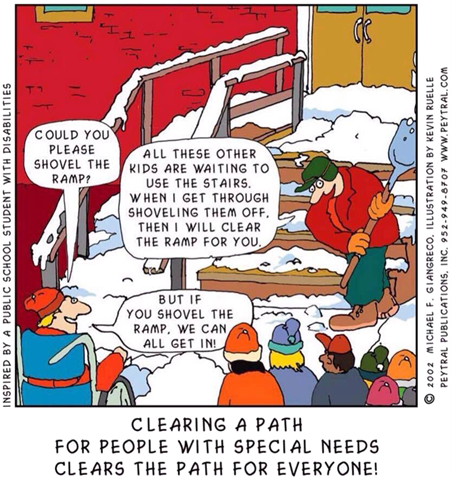
Cartoon showing a man clearing snow from the steps of a building but ignoring the snow on the ramp next to the stairs. A wheelchair user asks 'Could you please shovel the ramp?' to be told 'All these other kids are waiting to use the stairs, when I get through shovelling them off, then I will clear the ramp for you.'. The wheelchair user then replies 'But if you shovel the ramp, we can all get in!'Accessibility doesn’t just benefit those with disabilities. In many cases, improving the accessibility of a website can make it easier to use for everyone, including people without disabilities.

This comic by Michael F Giangreco and Kevin Ruelle sums it up nicely:

You may not think you’ll be affected, but the following are all groups of people who benefit from improvements in web accessibility:

  • people using mobile phones, smart watches, smart TVs, and other devices with small screens, different input modes, etc.
  • older people with changing abilities due to ageing
  • people with “temporary disabilities” such as a broken arm or lost glasses
  • people with “situational limitations” such as in bright sunlight or in an environment where they cannot listen to audio
  • people using a slow Internet connection, or who have limited or expensive bandwidth.

When you look at these examples, you can see how accessibility touches everyday life. Think about trying to fill out a form on your phone while juggling bags, or watching a video on mute in a noisy café – features like clear text, captions, and easy navigation suddenly become essential.

Our work on accessibility

In my role as Senior Digital Content Officer, one of my priorities has been to lead in this area, and over the last 18 months I’ve been working to research, describe and implement specific improvements to the accessibility of digital content on our website.

Some of these improvements were implemented very recently. Frequent visitors to this website may have noticed some of the changes – the most obvious being in how links look and how they behave when you mouse over them.

Ever struggled to figure out what’s a link on a web page? Links are a core part of the web, so they need to be clear – especially for users with vision challenges. Visible hover states help people spot interactive elements.

For example, using blue text for links is fine, but one key WCAG principle is that colour alone shouldn’t be the only way to show information, so another visual cue should be added. Underlining is the classic choice, though there are other options too!

With this in mind, we’ve made our mouseovers more visible for links on our website. We've also improved the visibility of ‘focus’ states – these are seen when navigating via keyboard (common for those users with motor issues that prevent the use of a mouse).

Here’s what the keyboard focus state of our main text links looked like before and after the recent improvements:

Before

Screen grab of a website link under keyboard focus which shows a thin grey dotted line around the blue hyperlink
After
Screen grab of a website link under keyboard focus which shows a yellow background to the link and a thicker black underline

Aside from the improvements that we’ve made by working with our web developer agency (Appius), we also run weekly checks using dedicated accessibility tools to help us improve pages across the site. Since March 2025, we’ve made over 500 fixes across hundreds of pages on this website.

This work is never finished, but we have now embedded a programme of continual accessibility improvements which will ensure that the website will become more accessible in successive years. We are also doing more to provide accessibility guidance and training to our colleagues who use our digital platforms.

If you have accessibility requirements and want to raise an issue about this website (or any of our digital channels), please get in touch with us as we’d love to hear your feedback.

Blog Author
Mark Turner

Senior Digital Content Officer

Previous post Next post
  • Mental health
  • Members
  • Improving care
  • About the College
  • Contact the College
  • Work for us
  • Digital accessibility statement
  • Jobs Board for Members
  • Cookies
  • Data protection
  • Disclaimer
  • College copyright and permissions to use content
VISIT US

London Office
21 Prescot Street London E1 8BB
0208 618 4000

Royal College of Psychiatrists

© 2026 Royal College of Psychiatrists.

Registered charity no. 228636 (England and Wales)

Charity registration no. SC038369 (Scotland)

  • Become a psychiatrist
  • News and features
  • Training
  • Events
  • Bluesky
  • Facebook
  • Instagram
  • Linkedin
  • Soundcloud
  • Threads
  • X
  • YouTube