
Add up to five of your favourite RCPsych pages to find them whenever you need.
You currently have no favourites. Visit and add pages to access them here.
Dr David Ollerenshaw – A closer look at the life of an RCPsych Bronze Medal winner
27 November, 2026
In 1972, Dr David Philip Ollerenshaw, now 86, was presented with a prestigious RCPsych Bronze Medal for his dissertation titled The Classification of the Functional Psychoses. He was one of several esteemed clinicians to receive the annual award between its creation in 1882 and discontinuation in 2006.
The award was originally introduced to recognise officers who had completed the best dissertation on a clinical or pathological subject relating to mental health disorders. It was reserved for those working below consultant level in psychiatric hospitals or units.
Dr Ollerenshaw used his dissertation to examine aspects of the classification of psychoses introduced by Kraepelin in 1896 and highlighted some of the differences between schizophrenia and manic-depressive psychosis. This was a promising start to what would become an impressive career in psychiatry but the journey to this point wasn’t always straightforward.
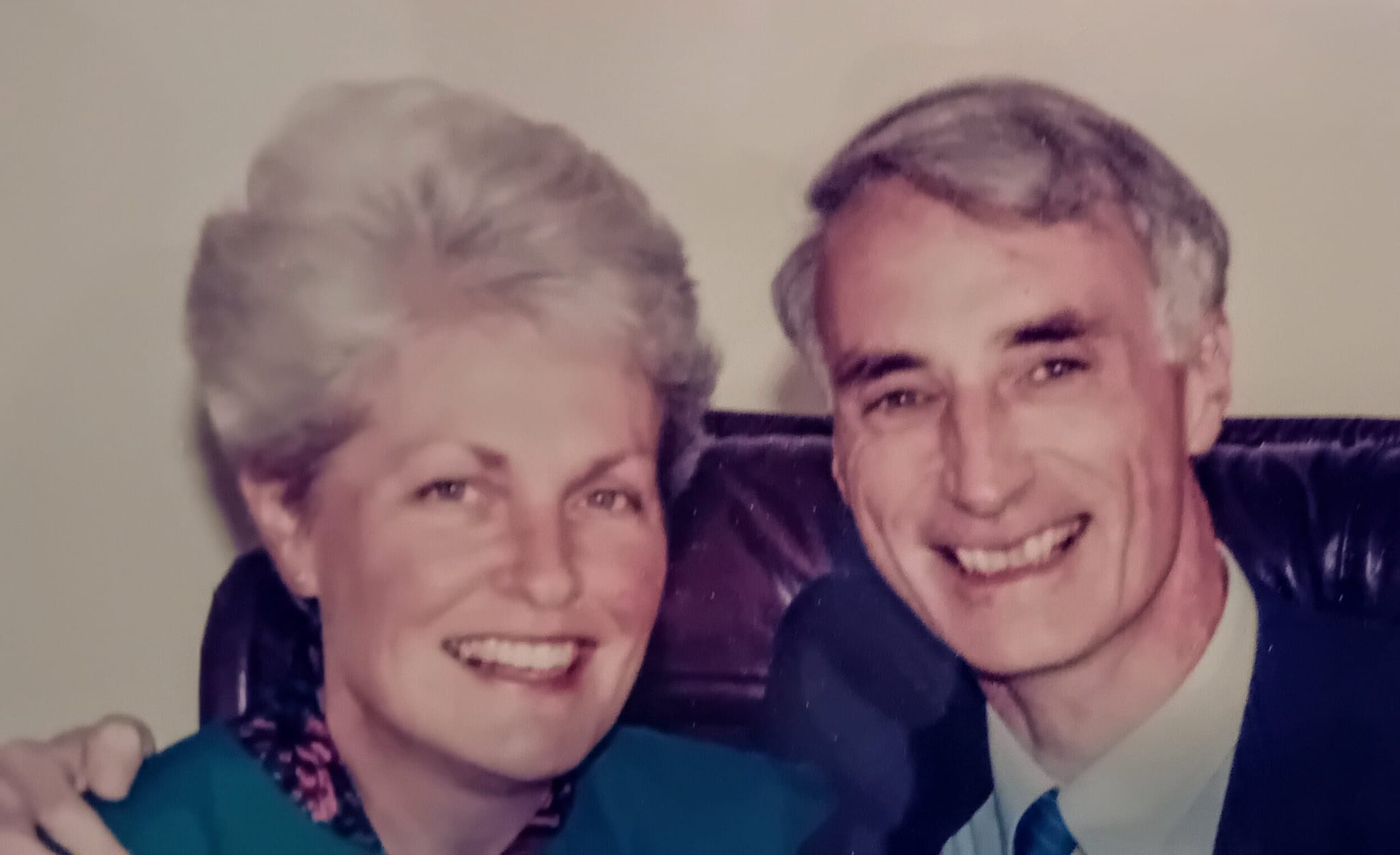
Dr David Ollerenshaw with his wife Jane Ollerenshaw
The Great Depression had taken a toll on David’s parents Arthur and Betty. Arthur’s family for many generations had been hat makers from Wigan. Betty’s parents had recently died and had suffered greatly from poverty and illness after the First World War. In an effort to find work, they had moved to London and trained as nurses (Arthur was one of the first male nurses in the country, progressing to working as a senior theatre nurse). After marrying and working in London, they moved to Newcastle where Betty’s father's family had lived. In 1939 at the start of the War, the pregnant Betty was evacuated to the Lake District where she gave birth to David. A few years later a younger brother, Michael was born. It was through his parents that David was introduced to the world of healthcare from an early age. Arthur was one of the first male theatre nurses in the country and David’s uncle Dr Stanley Gomez also gave him encouragement and insight into what a career in medicine might look like.
The family were relatively poor during David’s youth, and when he was ten they moved from Newcastle to work at a hospital and live in Black Notley, near Braintree in Essex. Arthur worked in theatres, and Betty with children suffering from tuberculosis. David studied hard to earn a place at a local grammar school, and when he attended sixth form Arthur had to fight for him to be allowed to study biology as the only options originally available to him were maths, physics and chemistry. This paid off as David was the first member of the family to attend university, studying at London Hospital Medical College in Whitechapel.
After completing his training at the Royal London Hospital to become a physician, Dr Ollerenshaw specialised in psychiatry. This was because he considered there were more opportunities in the psychiatric field to carry out original work. Also at that time fewer people were choosing to study psychiatry and so David felt he could have more of an impact on the profession.
David started by writing the dissertation that would earn him the College’s Bronze Medal and which was later republished. He quickly gained experience working in a variety of hospitals across England including Knowle Hospital near Fareham in Hampshire, Powick Hospital, Malvern in Worcestershire, and Roundway Hospital near Devises.
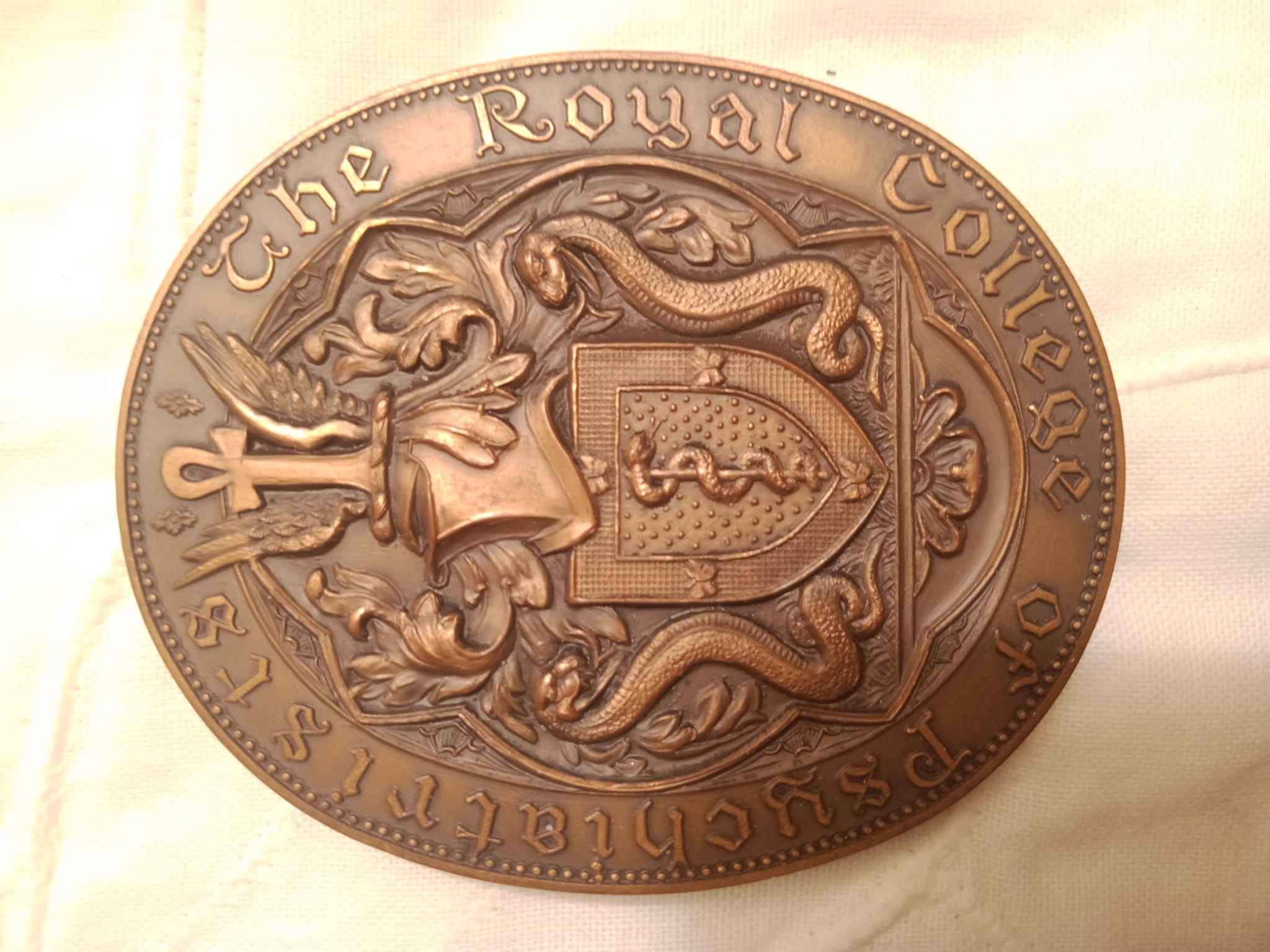
The Bronze Medal awarded to Dr Ollerenshaw
During the 1950’s and 1960’s David was influenced by some of the behavioural and learning-theory concepts that were associated with the new psychological movements such as those associated with London lecturers researchers of the time. David’s interest was particularly focussed on pharmacological and behavioural treatments strongly backed by the current evidence-based research.
His children and brother have clear memories of David as a Consultant Psychiatrist during the 1970’s driving around local areas doing domiciliary visits in rural Wiltshire, so that people could be looked after in their own home, as well as his hospital work in Swindon and Devises. He was often on call for emergencies on weekends which in those days meant ensuring he was near the phone at home. The Winter of Discontent in 1978 and 1979 would affect David in much the same way that the Great Depression had affected his parents. He and his wife Jane, a nurse he had met while training at the Royal Victoria Hospital in Boscombe in1967, decided to move to Australia. With other family members and close friends already living in Australia, they decided to avail themselves of the many positive life-style, career and educational opportunities available there at the time.
Dr Ollerenshaw found work at the large psychiatric facility: Lakeside Hospital, and also Parklands Clinic and Norwood Outpatient Clinic in Ballarat, Victoria. There he cared for patients with severe mental health issues both in the hospital and the community clinics and other settings. He worked at Lakeside until its closure in 1996. It was during this period that he became a Fellow of the Royal College of Psychiatry in1988.
David would go on to develop an increasing interest in the field of psycho-geriatrics, caring for and treating older adults at other hospitals and clinics in Ballarat, until his retirement from direct clinical work in 2016. After this, he joined the Mental Health Review Board in Victoria. This was an area of work he also thoroughly enjoyed, regularly travelling long distances by car and often by light-aircraft across the state of Victoria with small teams of legal, medical and social-working professionals. This was in order that his considerable psychiatric expertise and experience could be used in assessing people with severe severe mental illness, and ensuring that all ethical, medical and legal requirements were being upheld for the well-being and treatment of complex patients.
David’s commitment to psychiatry was matched only by his love for his wife Jane and his three children and three grandchildren. His family remember their husband and father as a quiet, hardworking man and are incredibly proud of the passion he put into caring for his patients and their upbringing. They remember well that “He never let work stop him from finding time to spend with them, and he was absolutely devoted to his wife whose support was invaluable to him."
Dr Ollerenshaw still treasures the Bronze Medal he received more than 50 years ago, and continues to live with his wife Jane in Ballarat, near to his children and grandchildren, after a lifetime dedicated to psychiatry and the care of people with mental health illness.
The College would like to express a special thank you to his son who informed us that his father's name had not been included in the online edition of the RCPsych Roll of Honour. This has since been updated.