
 With Scotland on the cusp of significant health and social care reform, the Royal College of Psychiatrists in Scotland is warning that mental health risks being left behind.
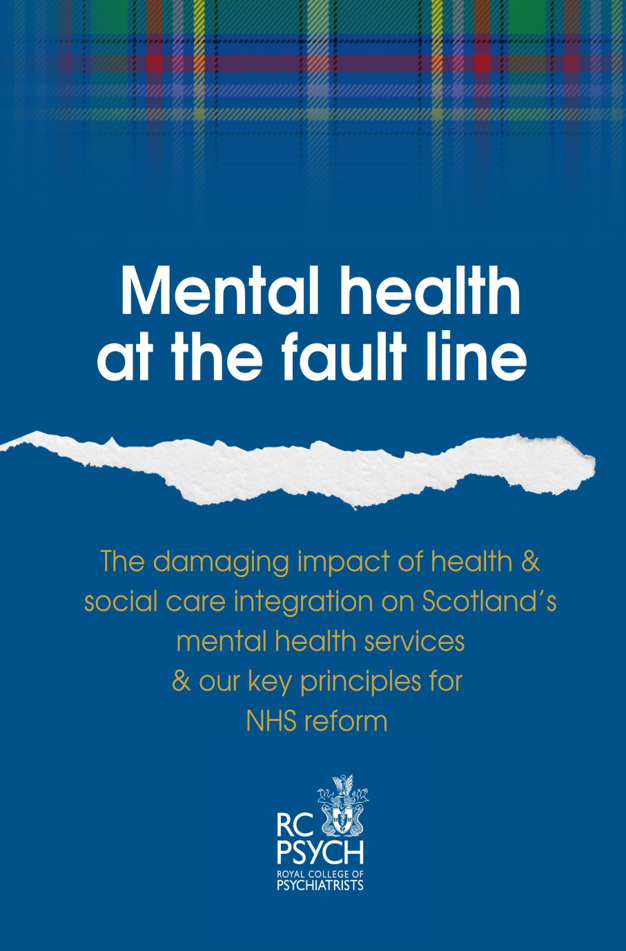
For World Mental Health Day, RCPsychiS called on the Scottish Government to give mental health equal priority to physical health in its NHS reform agenda. This is the College's first key principle for mental health reform, as outlined in its updated ‘Mental health at the fault line’ report.
Dr Pavan Srireddy, Vice Chair of the Royal College of Psychiatrists in Scotland, said:
“This programme of reform must make a tangible difference to the experiences of patients and the staff caring for them. This means reducing variation in care, strengthening services and ensuring people can get the right treatment wherever they live.
“With need for mental health services continuing to grow, mental health must be given equal priority to physical health, not treated as a secondary consideration. This includes giving mental health the same weight in strategic planning, resource allocation, performance management and system leadership.”
Having identified significant concerns with the current integrated health and social care system, RCPsychiS has set out key principles for mental health reform to improve outcomes for people across Scotland. These are highlighted in the College's updated ‘Mental health at the fault line’ report.
- Mental health must be given parity of esteem within NHS reform: Mental health must be recognised as an equal priority to physical health in the design, governance and delivery of NHS reform.
- Accountability and authority must sit together: Those responsible for outcomes, quality and patient safety must also have the authority and resources to be able to plan and deliver high-quality services.
- Expert clinical input must be present wherever decisions are made: Psychiatrists and other senior clinicians must have a meaningful voice in decisions that affect services, patients and the workforce in order to ensure their patients’ best outcomes and safety, and to deliver value for money by ensuring available resources are directed most effectively.
- NHS reform must create a system that is consistent, fair and equitable – reducing inequalities: Everyone in Scotland should be able to access high-quality mental health care regardless of where they live or their personal circumstances.
- Funding must be transparent and traceable, delivering measurable improvements in care: Mental health investment should be clearly identifiable, traceable, and demonstrably linked to better outcomes for patients.
- Workforce must be a primary consideration: NHS reform must support the recruitment, retention and wellbeing of the mental health workforce to ensure sustainable services for the future.
‘Mental health at the fault line’ highlighted serious concerns about the disproportionate impacts that Scotland’s decade-old integrated health and social care system is having on the delivery of mental health services. It identified a complex and poorly coordinated system that’s falling short of delivering the effective, joined-up care it was designed to provide.
The report raised serious concerns about patient safety, financial transparency and a lack of clinical leadership. With decision-making and service delivery dispersed across multiple organisations, the consequences have been particularly acute for secondary care and specialist mental health services.
NHS reform now provides an opportunity to learn from the longstanding challenges and build mental health services that are safer, more consistent and delivering for some of Scotland’s most vulnerable individuals.
Dr Srireddy continued:
“Every day, psychiatrists across Scotland see the difference that good mental health care can make to someone’s life. But we also see what happens when services are stretched, when there aren’t enough staff or when patients struggle to get the care they need.
“Where you live or what your personal circumstances are should never determine the quality of mental health care you receive. Someone experiencing serious mental illness in one part of Scotland should be able to expect the same high standard of evidence-based care regardless of where they live.
“This World Mental Health Day, our message is simple: mental health cannot be an afterthought in NHS reform. It must have the same visibility, influence and priority as physical health from the very beginning.
“Psychiatrists and other frontline clinicians know where the system works, where people are falling through the gaps and where changes could make the greatest difference. From the outset, their expertise needs to be around the table when decisions are made about services, staffing and resources.
“We also need to be honest about the pressures facing the workforce. Psychiatrists and their colleagues are working incredibly hard to provide high-quality care, but persistent vacancies and pressure on services make that harder. Reform must create the conditions in which we can recruit, retain and support the staff our patients need.
“Patients and staff should be confident that money intended for mental health services reaches the frontline and delivers real improvements in care. Future structures must provide greater financial accountability through transparent spending decisions and clear oversight of how funding is used. They must also establish clear lines of accountability for decision-making, so that responsibility is visible, understood and consistently applied across the system.
“This is a once-in-a-generation opportunity. Success shouldn’t simply be measured by whether structures and organisations have changed, but by whether a person needing mental health care gets better, safer and more joined-up support as a result. The Royal College of Psychiatrists in Scotland stands ready to work constructively with the Scottish Government, Parliament and partners to make that happen.”
For further information, please contact:
- Email: press@rcpsych.ac.uk
- Twitter: @rcpsych
- Out-of-hours contact number: 07860 755896