
Add up to five of your favourite RCPsych pages to find them whenever you need.
You currently have no favourites. Visit and add pages to access them here.
SAS Celebration Week 2026: SAS as a career choice (Dr Noni Kamau)
05 October, 2026
For this year's SAS Celebration Week, Dr Gathoni Kamau discusses why she sometimes describes herself as an 'accidental doctor'.
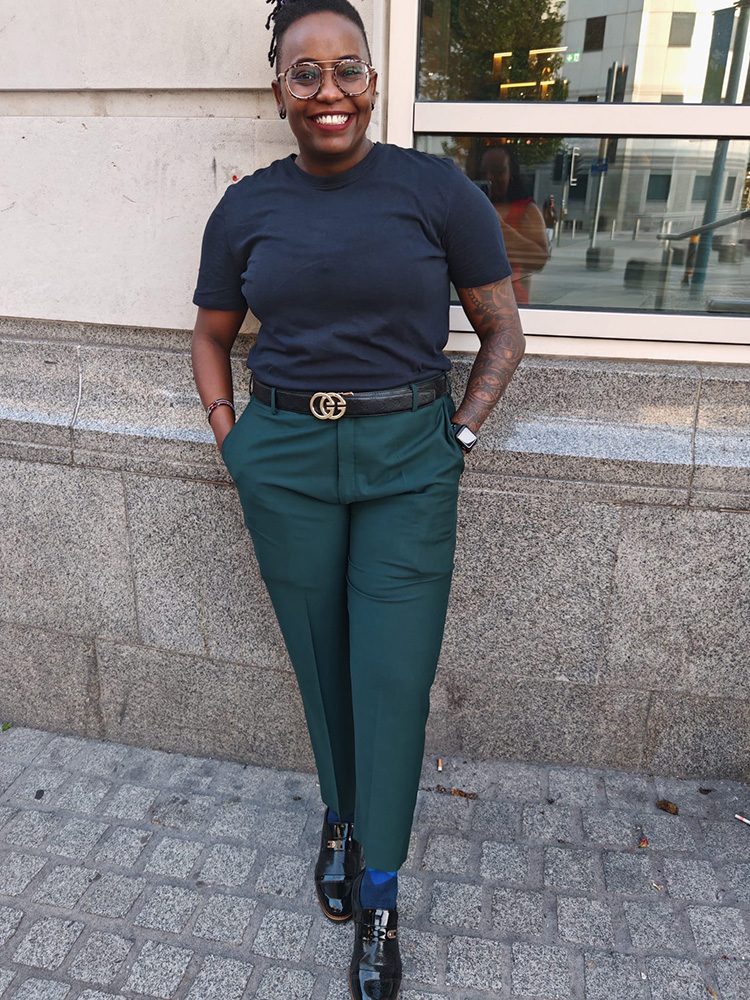 I often describe myself as an accidental doctor.
That might sound strange coming from someone who has spent years working in medicine, psychiatry, education, research and leadership. But the truth is that medicine was never part of my original plan.
In fact, my journey began somewhere completely different. I started a law degree, convinced that my future lay in the legal profession. It did not take long, however, for me to realise that it was not the right fit. Leaving that course was one of the first major decisions I made as a young adult and, although it felt risky, it taught me an important lesson: sometimes the bravest thing you can do is change direction.
That decision eventually led me to medicine and, perhaps unsurprisingly, I took an unconventional route there too. I trained in China, an experience that shaped me in ways I could never have anticipated. Living and studying in a different culture challenged my assumptions, broadened my horizons and taught me resilience. It required adaptability, humility and perseverance.
After qualifying, my career was anything but linear. Before finding my way into psychiatry, I worked in acute medicine, accident and emergency, and sports medicine. At times, I wondered whether I was taking too many detours. Many of my colleagues appeared to be progressing steadily towards a clearly defined destination, while I seemed to be collecting experiences.
Now, I see those experiences differently.
Each specialty taught me something valuable. Acute Medicine taught me how to manage uncertainty and complexity. Emergency Medicine taught me to stay calm under pressure and make difficult decisions when time is limited. Sports Medicine reinforced the importance of prevention, recovery and helping people reach their full potential. More importantly, each role taught me something about people.
Perhaps that is why I eventually found my home in psychiatry. Psychiatry appealed to me because it embraces complexity. It recognises that behind every diagnosis is a person with a story. It values listening, curiosity and understanding. For me, it brought together everything I loved about medicine: science, humanity, lifelong learning and meaningful relationships with patients and their families.
When I chose the SAS pathway, I did so for many of the same reasons. Too often, SAS careers are viewed through the lens of what they are not, rather than what they are. For me, becoming an SAS doctor was not a second choice or a fallback option. It was a positive and deliberate decision.
I wanted a career that allowed me to grow as a clinician while also pursuing my interests in education, leadership, quality improvement and research. I wanted flexibility to develop a portfolio career that reflected my skills and passions. The SAS pathway made that possible.
Today, alongside my clinical role in older adult mental health, I have the privilege of leading undergraduate medical education within my health board and serving as SAS Chair for Wales at the Royal College of Psychiatrists. I have contributed to national quality improvement initiatives, presented research, supported colleagues and advocated for the SAS workforce. These opportunities have enriched my career beyond anything I imagined when I first entered medicine.
One of the greatest strengths of the SAS workforce is its diversity. Many SAS doctors have followed unconventional journeys into psychiatry. Some have trained overseas. Some have worked across multiple specialties. Some have balanced family commitments, leadership roles or academic interests alongside their clinical work. What unites us is not the route we took, but the commitment we bring to our patients and profession.
As SAS Chair for Wales, I have met exceptional SAS psychiatrists whose contributions are transforming services, improving patient care and shaping the future of our specialty. Their stories remind me that there is no single definition of success in medicine.
For a long time, I worried that my career had too many twists and turns. Today, I see those twists and turns as strengths. They have given me a broader perspective, a deeper understanding of people and a career that reflects who I truly am.
I may be an accidental doctor, but becoming an SAS doctor was entirely intentional.
It has given me the freedom to build a career that is meaningful, varied and fulfilling. Looking back, I would not change a thing.
Dr Gathoni Kamau
Specialty Doctor in Older Adult Mental Health
SAS Chair for Wales