Add up to five of your favourite RCPsych pages to find them whenever you need.
You currently have no favourites. Visit and add pages to access them here.
SAS Celebration Week 2026: Specialist Grade (Dr Ravinthirakumar Sutharshanan)
06 October, 2026
For this year's SAS celebration week, Dr Ravinthirakumar Sutharshanan shares his reflection on the title that finally caught up – the Specialist Grade and his own SAS journey.
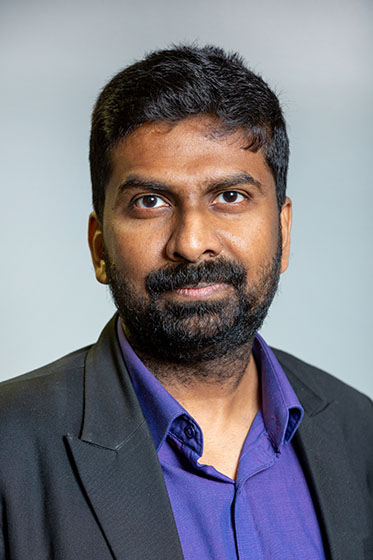 Nobody hands you a map when you arrive in this country as an international medical graduate. I got my registration and then, more or less, silence. So I did what a lot of International Medical Graduates do: I went where the door was open. That door was an RMO post in the private sector, which in practice means you're the one covering nights, weekends, and every unsociable hour nobody else wants. You learn to make decisions alone, fast, with no senior down the corridor, because there usually isn't one. You take it because it's the only door that opened.
Getting out of that wasn't a plan, it was luck colliding with persistence. A Specialty Doctor post came up on a neuropsychiatry ward, and somehow I landed it. The transition wasn't smooth. Neuropsychiatry doesn't forgive gaps in your knowledge, and I had gaps, so I spent that period learning fast and quietly, hoping nobody noticed how much I was catching up on in real time.
Then I sat MRCPsych, and that's where the real fork appeared. Pass the exam and the obvious move is the training route back into the NHS, start again on a lower rung, inside a system with a clear ladder. Or stay where I was, keep the consultant-adjacent responsibility I'd fought to get, and build my own case through the Portfolio pathway instead. No external structure confirming I was doing it right, no exam at the end, just years of documenting my own practice well enough to survive scrutiny I couldn't predict.
I chose to stay. Partly because starting over in a training post felt like giving back ground I'd only just taken, partly because I wanted to know if I could hold myself to standard without someone else forcing it. I could, but it was slower and lonelier than the training route would have been, and I didn't do it in total isolation. I kept a WhatsApp group going with friends who'd gone the training route, and I played badminton with a wider circle of doctors most weeks. Neither was formal support, but both meant I could see what "on track" looked like from people living it, and quietly measure myself against it. That mattered more than any document ever did.
That's really what I'd say to other SAS doctors, especially IMGs weighing the same fork: don't try to do this without people around you who understand the system from the inside, whether that's through the College's SAS network or your own version of the badminton group. Find people ahead of you or beside you and stay close to them. It's easy to assume the Portfolio route is something you work out alone. It isn't, and it shouldn't be.
I'm now in the final stages of that Portfolio pathway, having built a PICU ward from nothing along the way, no template, no inherited structure, just working out what good care should look like there and putting it in place.
There's no wrong answer at the training-versus-Portfolio fork. But know what each path costs, and don't do it in isolation.
Dr Ravinthirakumar Sutharshanan MRCPsych
Consultant Psychiatrist (Acting)