Add up to five of your favourite RCPsych pages to find them whenever you need.
You currently have no favourites. Visit and add pages to access them here.
Celebrating the 100th anniversary of our first Royal Charter
12 March, 2026

By Mandy Bryant, RCPsych Archivist and Records Manager.
On 13 March it will be one hundred years since we received our first Royal Charter and became the Royal Medico-Psychological Association, no longer just the Medico-Psychological Association (1865-1926), which in turn, was formed from the Association of Medical Officers of Asylums and Hospitals for the Insane (1841-1865).
Before the Royal Charter was granted, the Association had been given permission to use the prefix ‘Royal’ as stated in the letter received on the 9 September 1925, which read:
‘I am directed by the Secretary of State to inform you that he has laid before the King the petition of the Medico-Psychological Association of Great Britain and Ireland for permission to use the prefix ‘Royal’ in the name of their Association and that His Majesty has been graciously pleased to Command that the Society shall henceforth be known as ‘The Royal Medico-Psychological Association.”
However, the Association wanted to obtain a Royal Charter to elevate the status of psychiatrists and place them on a more even footing with other medical professions. As well as to promote the study of science in relation to mental disease and the treatment of persons suffering from mental disorders. Following an enquiry, a letter was received from the Privy Council, which said:
“Referring to your enquiry on the telephone yesterday relative to the formalities in connection with a Petition for a Royal Charter of Incorporation, I have to state that the General Rules of Procedure in regard to such applications are as follows:
- The application should be made in the form of a Petition to ‘The King’s Most Excellent Majesty in Council,’ which should be sent under the cover to The Clerk of the Council, Privy Council Office, Whitehall.
- The Petition should be accompanied by the Draft Charter asked for by the Petitioners.
- Both Petition and Draft Charter should be printed on foolscap, and the latter document should be in draft form (half margin). Ten copies of each document should be lodged.
“I have to add that if a Charter is granted, not otherwise, a fee is payable to the Home Office (vide Note to General Rules of Procedure).
“Upon the receipt of the Petition and Draft Charter, the normal procedure is for the same to be referred to a Committee of the Lords of the Council for Their consideration and report. A notification of this Order of Reference is published in the Gazette, and a month is allowed to elapse before such consideration in order that Petitions for or against the Draft Charter of Incorporation may be lodged at this Office.”
In response a Petition was readily submitted. It read:
“the incorporation of the Association by Your Majesty’s Royal Charter and the improvement of its status thereby effected, more particularly if it could be designated The Royal Medico-Psychological Association, would be the means of enabling the Association more fully to achieve its objects and still further to increase its usefulness in the help and treatment of all those who are affected with mental disorder, and thus be in the best interest of the community”.
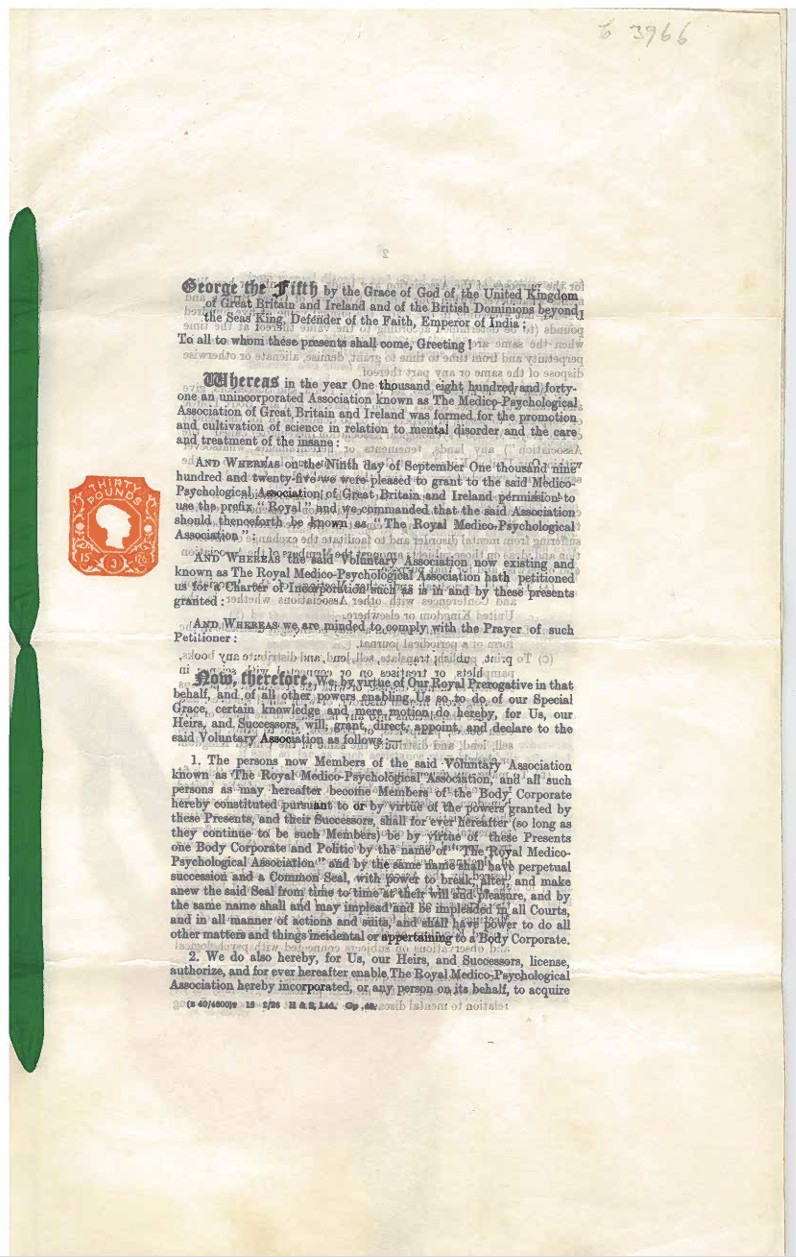
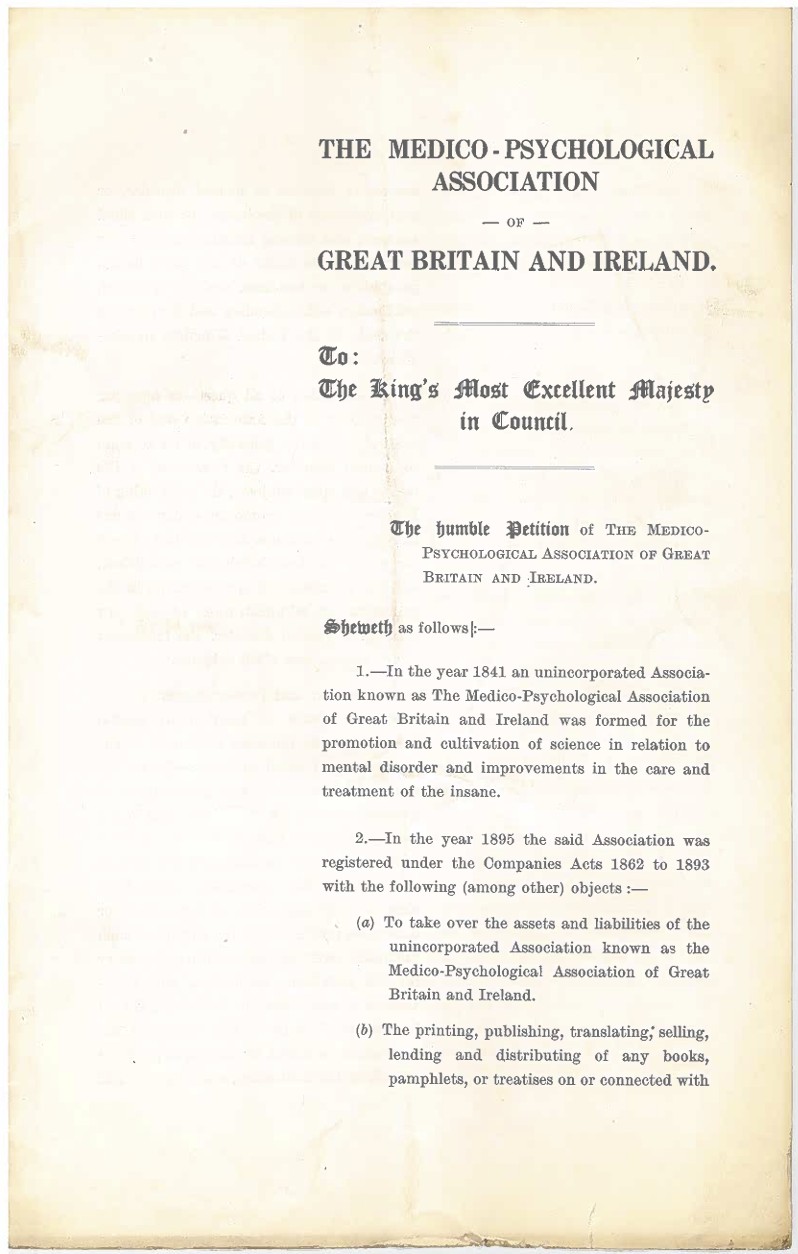
1926 RMPA Royal Charter (left) and Petition for the 1926 Royal Charter (right), images from College collections.
The petition was successful and the Royal Charter (full text) was granted by King George V, dated 13 March 1926.
The process of obtaining the charter had involved many, but it had been overseen by two Presidents – Frederick Mott (1925-26) and John Robert Lord (1926-27).
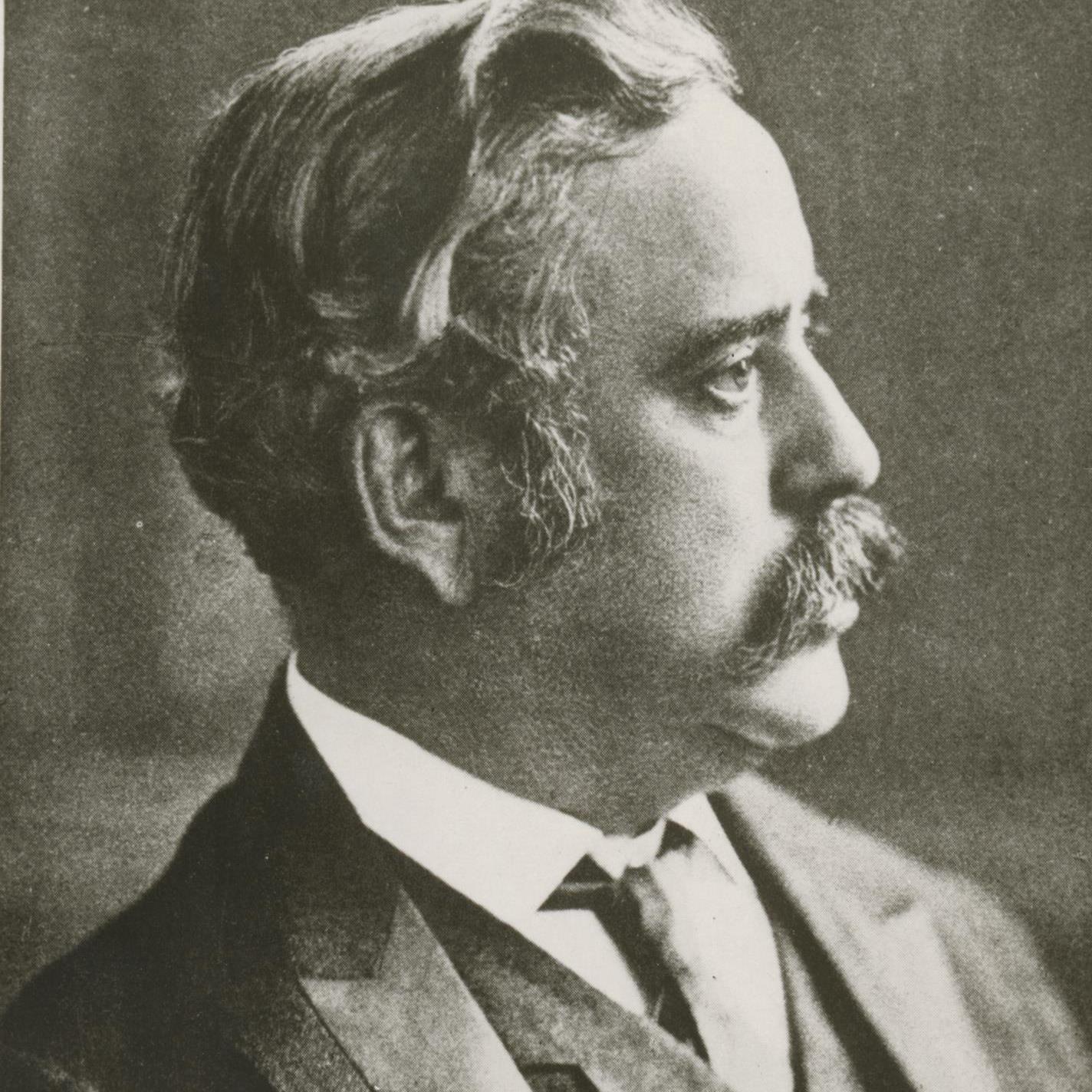
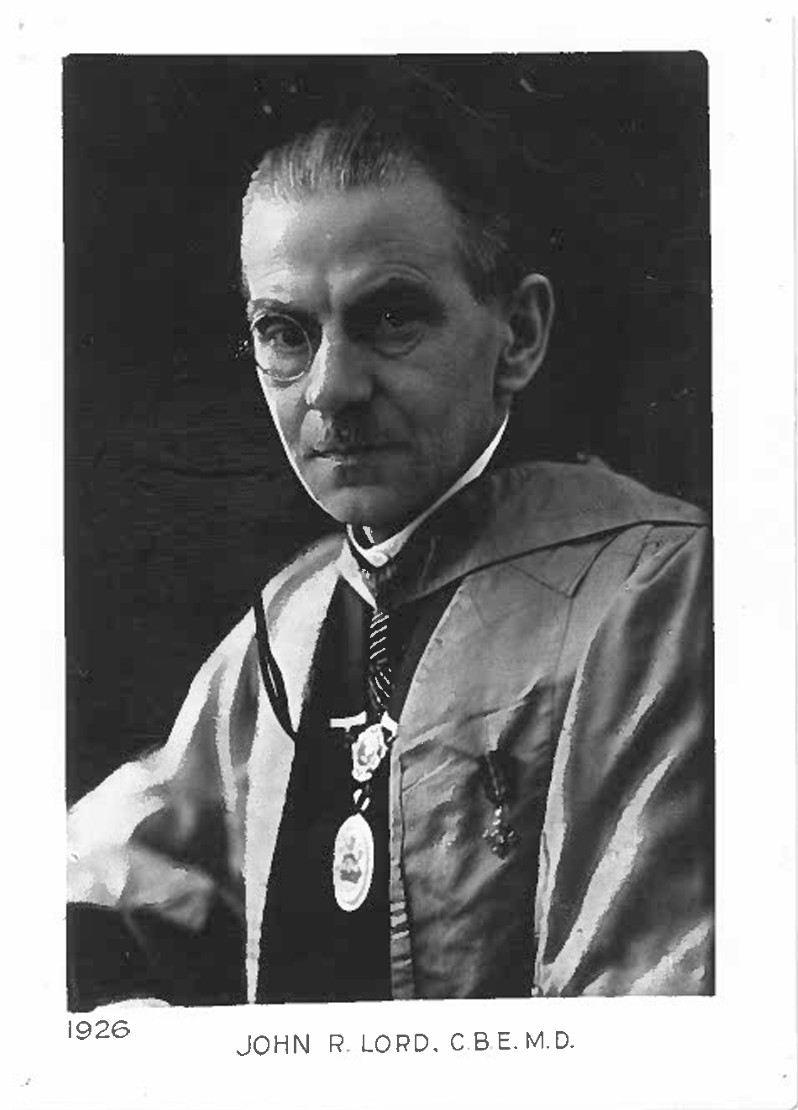
Frederick Mott (left) and John Lord (right), images from College collection.
Looking back, the 1926 Charter was a crucial step, which would eventually lead to the establishment of the Royal College in 1971, following the granting of our second Charter by the late Queen Elizabeth II.